
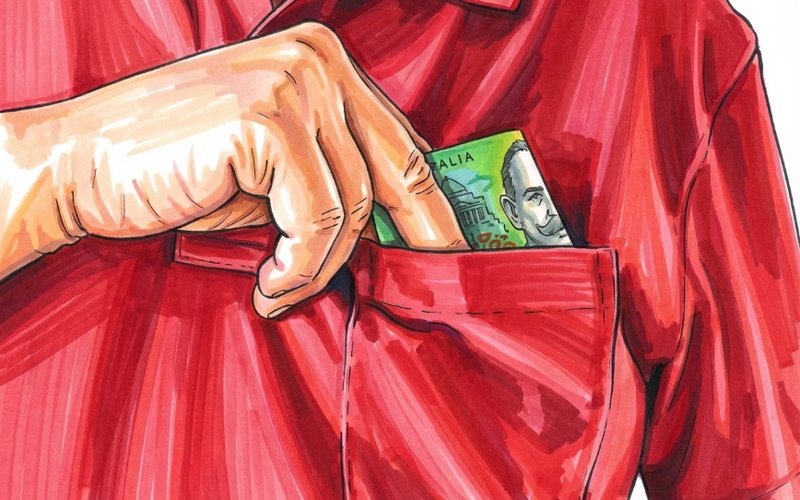
The old saying that governments give with one hand and take with the other has once again been shown to hold true here in Australia.
There has been a lot of anger and fury about the ‘take” hand recently, which will increase the taxation of superannuation fund earnings to 30% for balances above $3 million and 40% for accounts above $10 million.
What has escaped much attention amid the anger and fury from the wealthy elite with massive super balances is that, on the same day the controversial Division 296 superannuation tax passed through both houses, it was accompanied by another change to the Low-Income Superannuation Tax Offset.
Arguably, the “give” hand will be more important in ensuring a better retirement income for workers on lower incomes than the “take” hand’s extra tax, which will only have a marginal effect on the lifestyle of wealthier Australians.
Some Obvious Flaws Removed
Sure, rearranging superannuation and finding different investments is annoying but we are still only talking about 1 in every 200 people with super accounts facing lower concessions.
Now that the $3 million and $10 million thresholds will be indexed and unrealised gains will not be immediately taxed, some of the more fundamental flaws in the original Division 296 proposal have been fixed.
In raw numbers the $3 million super tax is estimated to initially hit only 87,000 people and the $10 million plus super tax will only hit around 8,000 Australians.
Admittedly, it will also have an important deterrence impact on people building up their super balances, which is also part of the intention in ensuring superannuation remains a retirement savings vehicle rather than becoming an estate planning tool.
By contrast, the “give” part of increasing the Low-Income Superannuation Tax Offset (LISTO) will benefit a much bigger cohort of Australians—approximately 1.3 million Australians by Treasurer Jim Chalmer’s calculations, including around 750,000 women and around 550,000 people under the age of 30.
The LISTO change was welcomed by much of the super industry, including the Association of Superannuation Funds of Australia, because it finally levels the playing field for workers on lower incomes.
That is important because under the existing arrangements, some Australians were actually facing a higher tax bill on their compulsory superannuation savings than on their income, which is manifestly unfair.
In terms of the number of people affected and the impact on their lives, the changes at the lower end are much more likely to have an enduring effect.
Lots of Lower Income Winners
Up to 45% of the Australian population earn $45,000 a year or less, and these changes will see some of them ending up with an extra $15,000 in their super nest egg by the time they retire.
The changes announced for the low-income tax offset (LISTO), expands the threshold for assistance from those earnings $37,000 or less up to a new threshold of $45,000.
The maximum government payment under LISTO will also increase from $500 to $810 from July 1, 2027, with workers earning between $28,000 and $45,000 getting an average increase in the LISTO payment of $410.
That may not sound like much but, with the compounding nature of superannuation and long timeframes, it could make a significant difference to final balances.
The basic idea behind LISTO is very simple—it is designed to compensate often young workers who would otherwise be paying the 15% earnings tax on their superannuation fund at a higher rate than on their pay.
Lack of Indexation Hurt Young Workers
Because LISTO was previously not indexed from when it started in 2017, many young apprentices, tradies, construction, and other workers progressively have started to miss out on some early support that would greatly boost their later retirement savings.
Super fund CBUS pushed for changes to LISTO because it had noticed the number of its members receiving the benefit had fallen a lot over the past five years.
That has now changed with the increased amount of $45,000 a year reflecting the years of lost indexation with the rise in the maximum payment to $810 also making up for lost indexation.
The issue which Cbus has outlined is that with no indexation many workers who are still on quite low effective incomes are missing out on the full benefit of getting LISTO payments over many years.
The changes should put an end to the strange situation in which some workers are forced to pay a 15% tax on their superannuation contributions - a higher rate of tax than they would pay if it was earned outside superannuation.
