
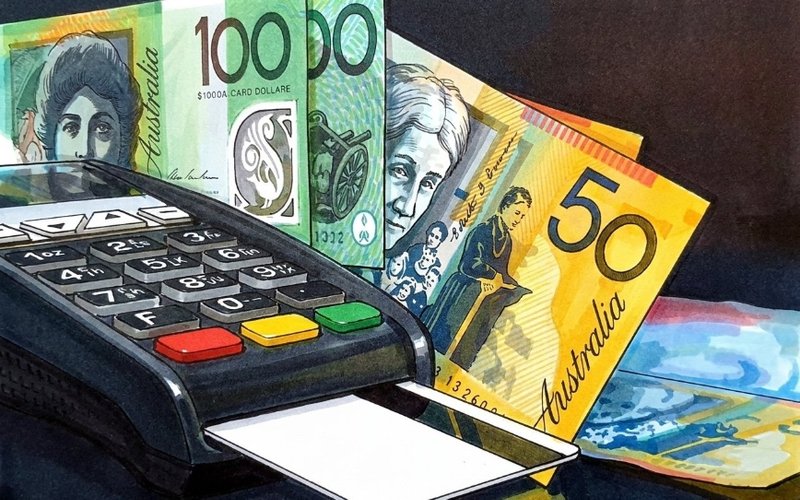

- 01Cash use rising despite tap-pay growth.
- 02About half of Australians use cash weekly.
- 0315.4% of payments were cash in 2025.
It has been a couple of weeks now since almost two million Australians deliberately withdrew cash out of banks and ATMs as part of Cash Out Day on April 28.
While the growing popularity of joining this form of quiet protest about the diminishing use of cash in the economy might make it seem like cash use is close to extinction, the use of cash has in fact been quietly rising.
While it is true that tap and go payments have soared in popularity, Reserve Bank figures show that cash usage is going through something of a rearguard renaissance, even as the business model for the distribution of cash is becoming really precarious, as I described here.
About Half Use Cash Weekly
The RBA figures show that around half of Australians continue to use cash every week and its popularity is surprisingly increasing.
The RBA found that cash remains very important—particularly among older Australians.
“Cash supports economic inclusion, serves as a fallback if electronic payments are unavailable, and is an important store of value, particularly during periods of economic uncertainty,” the central bank found.
It also discovered that 15.4% of payments (by number) were made with cash in 2025, the first rise since the RBA payments survey began in 2007 and up from 13.3% three years ago.
Nevertheless, that is a small rise compared to the 69% of cash use recorded when the RBA survey first began gathering data.
More Cash Used in Shops
In-person cash payments predominantly at shops totalled almost 20%, an improvement on 2022’s 16.4 per cent.
Interestingly the main use of cash was for smaller transactions, with around one-in-four payments under $10 being made with cash.
A big reason for that is probably the small amount of cash in wallets and purses, with the middle or median amount most people carry being just $65.
“Australians have consistently used cash more frequently to pay for leisure – such as going to the cinema or local community events – than for most other types of spending, even as overall cash use has declined in the past 20 years,” the RBA found.
That meant that the leisure sector accounted for about 34% of cash payments in 2025.
Cash was less popular for paying for transport, at only 15%, as card taps were increasingly used for public transport, rideshares and taxis.
Some Aussies Mainly Use Cash
There are some real die-hard cash users in Australia, with around 3% relying on physical currency for 80% or more of their transactions.
Low cash users, who pay cash for up to 20% of transactions, account for about 17%, with the use of cash spread across all demographic groups.
The RBA found that millions of Australians like to use cash and see it as an important backup to keep at home or in their wallets in case electronic payment systems go down or they have an unexpected expense.
When asked why they need cash, most survey respondents said it was to pay merchants that only accept cash or to make budgeting easier, pay family and friends or for security and privacy reasons.
Avoiding Surcharges
Another important reason cited by 20% of those surveyed was to avoid surcharges on other payment methods.
With more than $100 billion worth of Australian banknotes still in circulation, cash is not disappearing anytime soon, even though the economics of distributing it across the country are getting more challenging all of the time.
To ensure that remains the case, the Federal Government introduced a cash mandate from January 2026 which covers the essential service providers such as supermarkets, utilities and petrol stations.
Get the wire before the market opens.
The ASX small-cap stories that matter, filed before 9am AEST. Curated by the Small Caps desk.