


- 01Budget: neg gearing/CGT tweaks = revenue grab; hurts supply.
- 02CPI/tax: $250k threshold outdated vs inflation.
- 03Tungsten: Viking Mines & Sky Metals buoyed by supply shifts.
The latest episode of the Theory of Thing Investment Podcast is officially live.
You can catch the full visual experience over on YouTube or listen on the go via Apple Podcasts.
Here is what we unpacked this week over some highly debated instant coffee:
- The Federal Budget Fumble: We weighed in on the recent property policy changes from Treasurer Jim Chalmers. The push to alter negative gearing and capital gains tax rules under the guise of helping young first-home buyers looks a lot more like a straightforward revenue grab. If you take away the core incentives to invest in new housing, you ultimately hurt supply, keep house prices high, and lock younger generations out of the market entirely.
- CPI Indexing and Outdated Rules: Angus Taylor's budget reply brought up a fantastic point regarding the indexing of tax brackets to CPI. We took that logic a step further to look at the current sophisticated investor thresholds. The $250,000 income test has not changed in twenty years. Just because someone earns a high income as a dentist does not mean they automatically understand venture wealth or sophisticated asset management, proving the rules are severely out of step with modern inflation.
- The Tungsten Wave: Following up on the recent Tungsten '26 webinar, critical minerals are performing beautifully. Viking Mines (ASX: VKA) remains a top pick at a lean $29 million market cap with its high-grade Nevada pure-play asset. We were also thoroughly impressed by Sky Metals (ASX: SKY), whose timely pivot from treating tungsten as a minor revenue stream to a 100% core focus aligns perfectly with China's tightening export restrictions. You can dive deeper into our targeted analysis for both companies via the Small Caps Sky Metals research portal and the updated Small Caps Viking Mines research report.
- Direct Lithium Extraction vs the Sulphur Trap: In the lithium space, Lake Resources (ASX: LKE) is navigating the current global supply chain pressures remarkably well. While traditional hard-rock spodumene processing in Australia relies heavily on sulphuric acid, which is facing massive input cost spikes, Lake's direct lithium extraction (DLE) brine technology in South America entirely bypasses the traditional evaporation ponds and the acid supply chain. Read our deep-dive coverage on this via the Small Caps Lake Resources research report.
Balance the Books Yourself
If you think you can handle the numbers better than Chalmers, now is your chance to prove it. Rob Greco (@greco_rob) has put together a brilliant interactive app where you can test your fiscal skills and try to balance the federal budget yourself. Have a go at the controls right here: Australian Budget Simulator.
My friend Martin took about 3 minutes and came up with this…
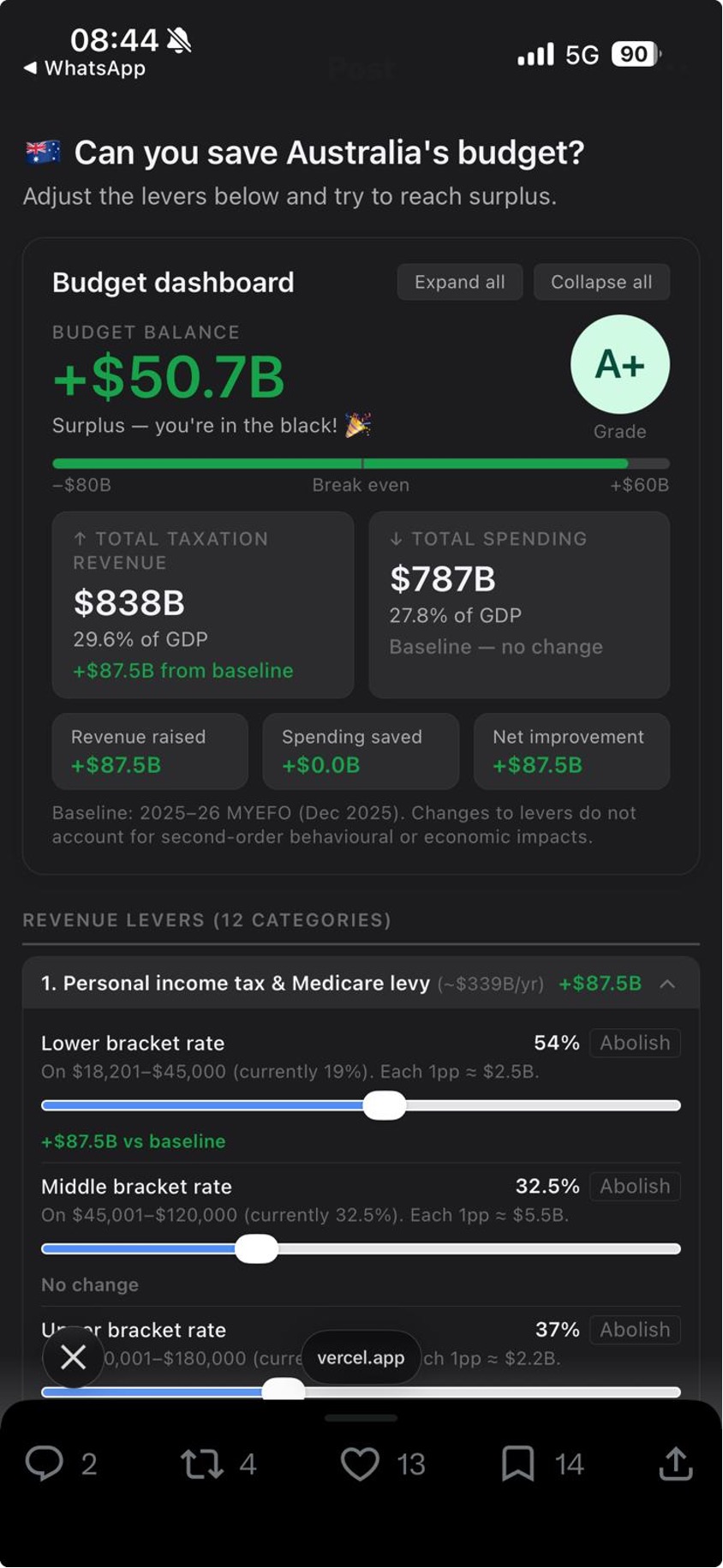
Take that, Chalmers!!!
Market Outlook: Toppy transports and treasury traps
Global equity markets are looking increasingly toppy as we head into the high-stakes Nvidia earnings block.
The vertical run in the S&P 500 and NASDAQ has left equities vulnerable, especially with corporate guidance entering a quiet window post-Nvidia.
Compounding this fatigue, US Treasury yields are whipping violently higher, reflecting deep anxiety over sticky global inflation and massive fiscal deficits.
The Doomsday Scenario: The reverse carry trade
The primary structural threat to this fragile liquidity regime is a potential currency-driven cascade. Under this scenario, soaring Japanese Government Bond (JGB) yields pressure the Bank of Japan into aggressive monetary tightening, triggering a rapid, violent unwind of the multi-trillion-dollar global yen carry trade.
As investors rush to cover yen shorts, they are forced into a mass liquidation of foreign assets. This triggers a mechanical surge in US Treasury yields as bonds are dumped, causing a severe collapse in global market liquidity and culminating in a brutal equity market rout.
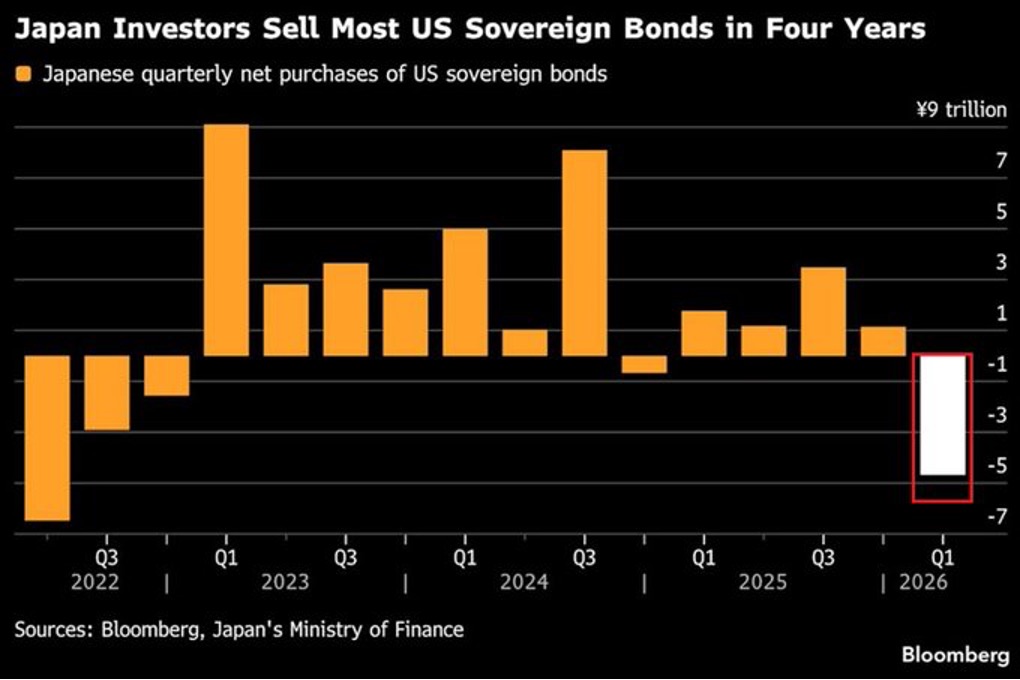
It’s already in play…
The Macro Engine: Tracking the southwest monsoon
As global surface temperatures push into uncharted territory, macro asset allocation requires tracking deep atmospheric patterns. The transition across the tropical Pacific is altering global weather setups, bringing the tracking of the Southwest Monsoon front and center for resource and commodity investors.
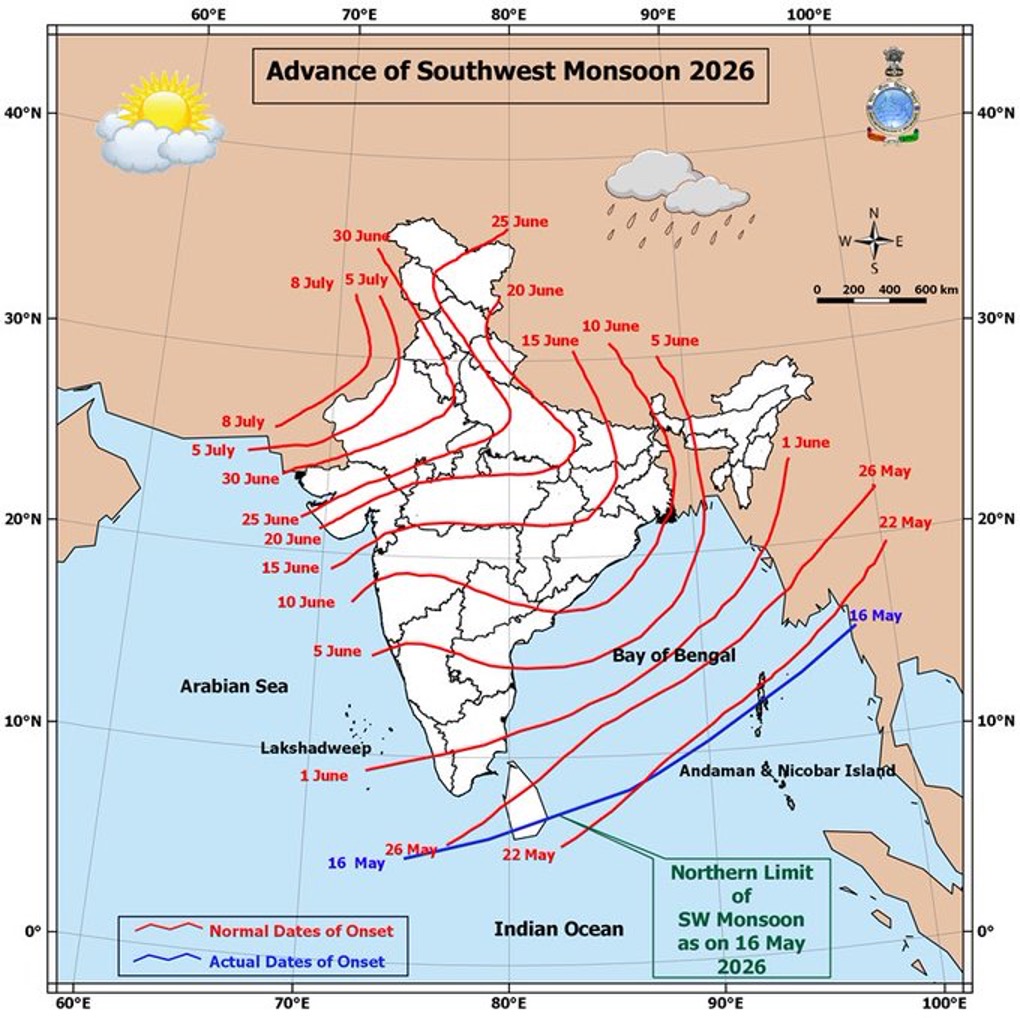
The annual monsoon in India is not an isolated regional weather event. It is a powerful planetary thermodynamic engine that dictates global macroeconomic realities through two core functions:
- The Tropospheric Heat Pump: The monsoon relies on the vast thermal contrast between the warming Indian landmass and the Indian Ocean. The resulting convective rainfall releases monumental amounts of latent heat into the upper troposphere, creating a massive atmospheric pump that alters global pressure gradients.
- The Teleconnection Ripple Effect: This energy exports outward via the Circumglobal Teleconnection, which is a planetary wave train traveling along the mid-latitude jet stream. Shifts in monsoon strength generate Rossby wave responses that trigger summer blocking patterns downstream, causing extreme heatwaves or unseasonal droughts across East Asia, Europe, and North America.
With early meteorological models projecting monsoon volumes to fall below long-term averages due to anomalous descending air currents over South Asia, global agricultural yields, soft commodity supply chains, and baseline climate patterns face a volatile second half of the year.
TLDR: this job is more than simply doing ten minute interviews with mining execs. You need to understand the weather.
The Silent Killer: The global sulphur and acid crisis
While the financial press remains transfixed by crude oil volatility and central bank rhetoric, the most dangerous bottleneck in the global economy is developing entirely out of sight. I cannot stress enough how significant the current global sulphur and sulphuric acid shortage will be to the entire industrial base.
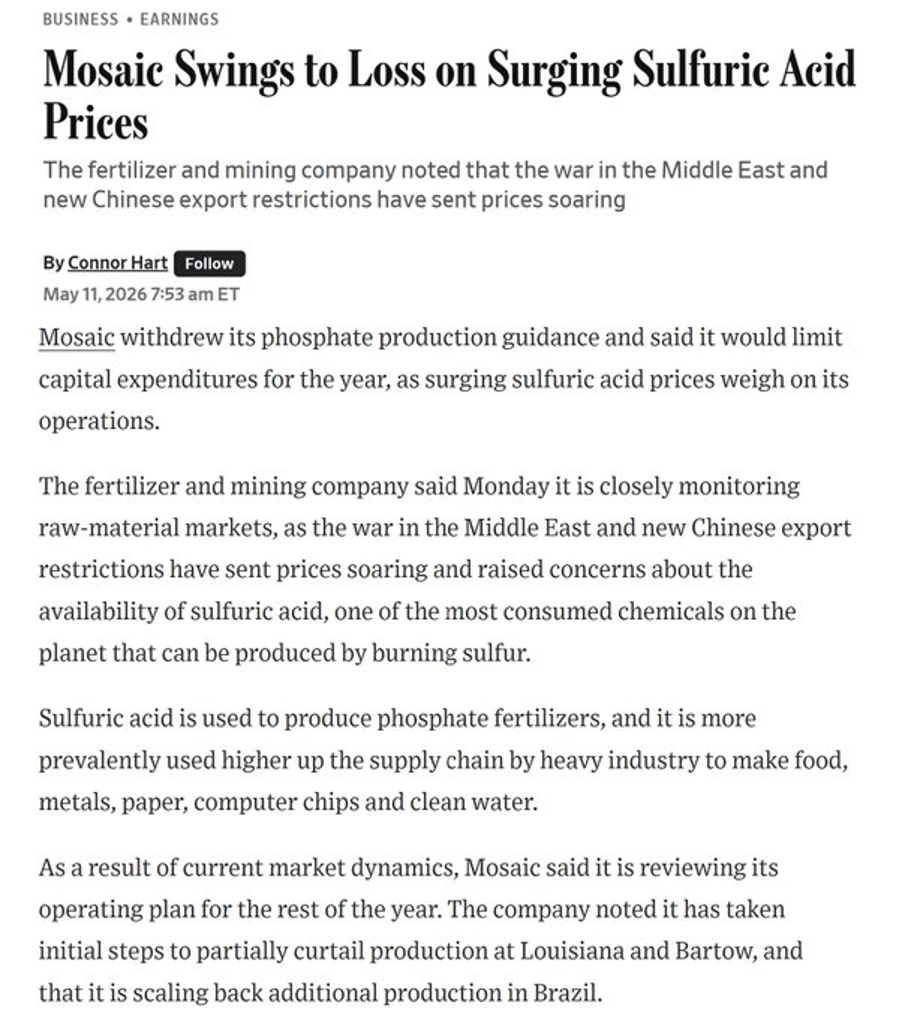
We are currently witnessing a dual supply shock of historic proportions. The effective closure of the Strait of Hormuz has frozen access to the Middle East, which controls nearly half of all seaborne sulphur trade. Compounding this catastrophe, China, which stands as the world’s dominant sulphuric acid producer, has halted all exports to protect its domestic fertiliser supply.
Sulphuric acid is the literal "digestive system" of modern heavy industry, and it cannot be economically substituted or easily stockpiled due to its highly corrosive nature. The consequences of this crunch are systemic:
The Agricultural Threat: Approximately 60% of global sulphuric acid is consumed by the fertiliser industry to produce phosphate inputs. With global sulphur prices surging 500% and fertiliser costs jumping over 25%, this crisis is flowing directly into agricultural operating costs, creating an immediate structural threat to global food security and baseline inflation.
The Energy Transition Bottleneck: Sulphuric acid is the foundational chemical required for hydrometallurgical processing. The entire EV battery supply chain relies on it to leach critical minerals, including copper extraction via solvent extraction-electrowinning (SX-EW) and high-pressure acid leach (HPAL) nickel processing in nations like Indonesia.
With delivered acid prices screaming to unheard-of levels in sub-Saharan Africa and South America, mining operators are facing an immediate logistical wall. New chemical processing plants take years to permit and build, meaning this is a hard physical limit on global production. If the acid runs dry, the factories, the mines, and the energy transition stop cold. This isn't a temporary market bleep; it is a fundamental threat to global industrial output.
Bonus: My interview with the Head of BHP’s Xplor program Marley Palin is here. I’m a big fan not only of the programs ability to pick out great up and coming names but also of the megaminer’s awareness of their own size. Tune in here it’s really good.
Stay safe and all the best,
James
Get the wire before the market opens.
The ASX small-cap stories that matter, filed before 9am AEST. Curated by the Small Caps desk.