


- 01CGT rise could slow trading; risk revenue drop.
- 02Tightening tax spurs hoarding; asset velocity falls.
- 03SpaceX IPO: SPCX likely ticker.
The federal government's recent announcement to increase Capital Gains Tax (CGT) inclusion rates has naturally dominated the domestic corporate landscape over the last fortnight.
While the wider investing public is already well across the core compliance adjustments, the policy logic behind it deserves closer economic scrutiny through the lens of the Laffer Curve.
The underlying concept remains elementary but structurally unyielding: tax a transaction too heavily, and investors simply stop transacting.
You can raise a statutory tax rate on paper to whatever percentage satisfies the fiscal deficit projection, but if the velocity of capital distribution falls off a cliff because asset holders choose to sit on their hands, total revenue collected collapses.

We do not have to look very far back into financial history to see this mechanical feedback loop play out in real time. Cast your mind back to 2005, when a series of major global tax adjustments proved this exact point.
When capital gains rules are tightened aggressively, capital enters an artificial gridlock. Rather than locking in profits and reallocating capital into more productive, high-growth sectors, investors opt for structural asset hoarding, triggering a revenue deficit paradox.
By increasing the friction on capital recycling, the current policy framework risks pushing the Australian investment ecosystem past the peak efficiency point of the Laffer Curve, swapping genuine economic momentum for a short-sighted revenue calculation.
Launching to the Public: The SpaceX ticker play
While global equity markets enter a choppy phase ahead of the tech sector's key data drops, institutional chatter is rapidly focusing on the highly anticipated SpaceX IPO.
Rumours of a confidential filing have the street projecting a massive listing window, with early estimates pricing the rocket maker at a jaw-dropping valuation that would make it one of the richest public debuts in financial history.
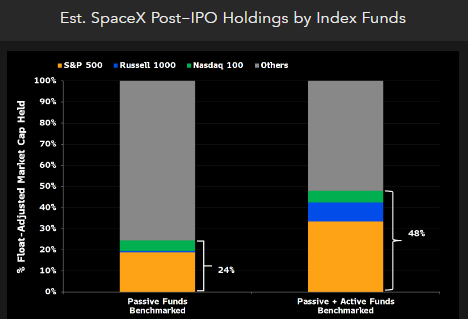
For thematic investors and ETF watchers, the operational setup is matching up with a fascinating piece of market chess. Bloomberg Senior ETF Analyst Eric Balchunas highlighted a brilliant structural observation regarding the likely ticker symbol for the listing.
It looks highly probable that Elon Musk will lock down SPCX as the official stock code for the SpaceX IPO. The ticker was previously held by Matt Tuttle for an active ETF vehicle, but a timely code change cleared the deck.
Interestingly, the Bloomberg ETF team flagged this exact prediction late last year, noting that the code discovery was highlighted by Will Hershey of Roundhill Investments, the same market figure who famously gave up the coveted "META" ticker to Mark Zuckerberg.
Secure your front-row seats, because if the SPCX ticker drops, the institutional scramble will be historic.
Broken Hill Mines Restarts Pinnacles to Fuel Hub-and-Spoke Model
If you are tracking small-cap players making genuine, near-term operational steps, Broken Hill Mines (ASX: BHM) is one to watch.
The company has officially restarted mining operations at the historical Pinnacles silver-lead-zinc mine in New South Wales for the first time since it went into care and maintenance during the 2021 pandemic disruptions.
This is a structural operational change rather than just a casual restart. BHM is actively deploying a hub and spoke production model centred on its foundational 750,000 tonne per annum Rasp processing facility.
By bringing Pinnacles back online, BHM has unlocked its second high-grade ore feed within 12 months of its ASX listing, combining it alongside the Main Lode and the long-term Western Min ore supplies into a singular, highly efficient processing pathway.
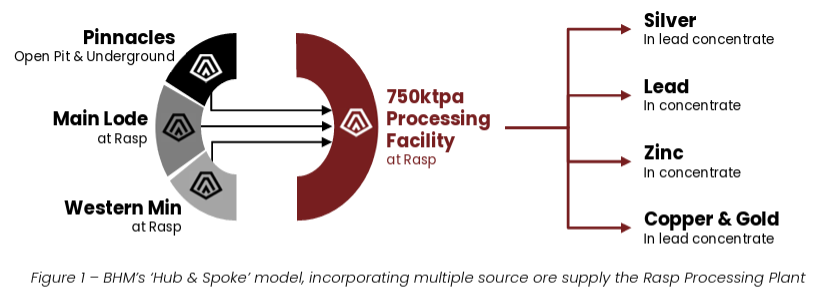
The Plan for the Extraction
The strategy moves straight into high gear with a clear focus on the existing open-pit operations:
- Immediate Stockpiles: BHM has already pinned down up to 50,000 tonnes of high-grade ore sitting right at the base of the existing pit, left behind when logistics ground to a halt in 2021. Contractor mobilisation is complete, and truck-and-shovel operations are actively moving dirt, with the first ore scheduled to be trucked 15 kilometres over to the Rasp mill within the June quarter.
- The Expansion Footprint: The initial open pit represents just the first phase. BHM intends to progressively expand its footprint into the adjacent Consols South, Fishers, Rope Shaft, and Junction targets to exploit shallow, high-grade extensions.
- The Underground Potential: Beyond the immediate open-cut gains, the team is aggressively assessing the deeper, very high-grade underground potential at Pinnacles to introduce an additional high-grade feed source over the near term.
The underlying math shows why the market is paying attention. Over the past year, near-surface drilling has returned spectacular intercepts, including a headline 7.9 metres at 56.4% zinc equivalent and 1,562 grams per tonne silver equivalent from a shallow 57 metres.
The baseline resource provides a massive structural foundation:
"The current historical Pinnacles mineral resource estimate is 6 million tonnes at 13.5% zinc equivalent and 374g/t silver equivalent. This includes 132g/t silver, 3.3% lead, and 4.7% zinc."
BHM is currently working toward a comprehensive mineral resource estimate update for late 2026 to formally bring their recent successful drilling campaigns into the books.
By feeding this high-grade material directly into the fully permitted, under-utilised Rasp infrastructure, BHM is bypassing the traditional multi-year developmental lag that delays typical explorers, pivoting themselves directly into an accelerating production ramp-up.
Euro Gas: The looming supply shortage
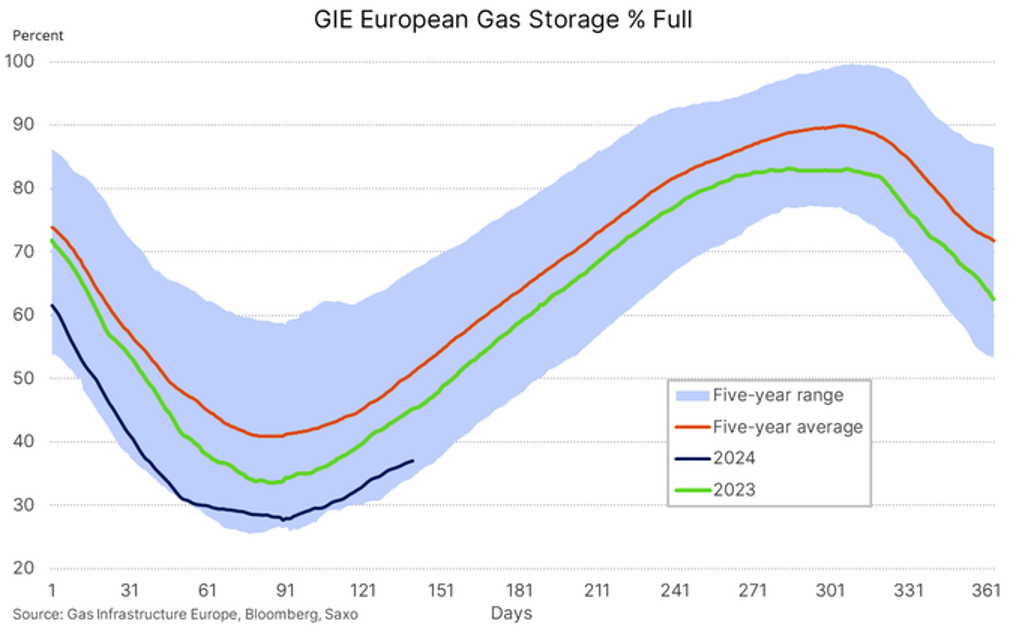
While local markets are concentrated on domestic policy, the European energy matrix is rapidly flashing early warning signs ahead of the winter storage cycle.
The structural vulnerabilities in continental natural gas supply have been brought into sharp focus by a significant technical breakout in Dutch TTF front-month natural gas futures.
As highlighted across institutional trading desks, the technical chart for Dutch TTF gas has pushed cleanly out of its multi-month consolidation pattern, clearing major resistance levels to register a multi-month high above ~€47 per megawatt-hour.
This upward price pressure is being reinforced by shifting fund dynamics, with net-long speculative positioning in European gas futures steadily climbing to levels not seen since late last year.
This is not merely a technical blip; it is an early reflection of structural supply anxieties. Europe's reliance on fragile global liquefied natural gas (LNG) supply chains leaves the continent heavily exposed to international competition, sudden processing disruptions, and intensifying geopolitical bottlenecks.
Any unseasonable supply tightness or unexpected infrastructure maintenance over the coming months risks triggering a violent squeeze on available inventory, serving as a critical reminder that the global energy crisis remains far from resolved.
Europe is really needing that Strait open and open quick.
On the Road: Catch me in Brisbane
I will be up in Brisbane this coming Thursday for a worthy conference, the Ensombl ALPD Day.
If you are a financial services professional, asset manager, or advisor operating in the local industry and want to chat macro, talk through the current resource setups, or simply connect face to face, you can secure your spot at the session via the official link: Brisbane Industry Presentation Event Registration.
I will be on the ground talking up our newly upgraded Investor Pulse portfolios to anyone who will listen, running through our latest asset allocations, structural weights, and why our accounts are built to handle these precise market conditions.
I hope to see a few of you there. Let me know if you can make it!
James
Get the wire before the market opens.
The ASX small-cap stories that matter, filed before 9am AEST. Curated by the Small Caps desk.