

- 01Sovereign finds monazite and heavy REEs at Kasiya.
- 02Dy-Tb 2.5% and Y 11.8% of TREO; above peers.
- 03Monazite could lift DFS value with near-zero extra cost.
Sovereign Metals (ASX: SVM) has identified the presence of monazite plus critical heavy rare earth elements (REE) across multiple pits at its Kasiya rutile-graphite project in Malawi.
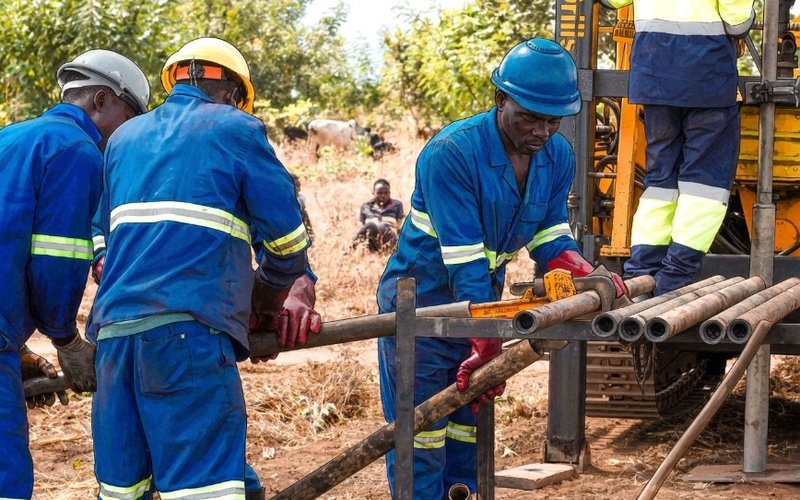
Concentrate containing critical and highly valuable dysprosium, terbium, and yttrium was recovered from the planned Babbler, Kingfisher, Sparrow and Mousebird pits within the project’s definitive feasibility study, some of which have been scheduled for first year production.
Oxide ratios of these elements in the total rare earth oxide (TREO) basket average 2.5% dysprosium-terbium and 11.8% yttrium—approximately seven times higher than ratios demonstrated by the world’s five largest rare earth producers (0.4% dysprosium-terbium and 1.7% yttrium).
The highest ratios of up to 3.1% dysprosium-terbium and 17.2% yttrium were found within six metres of surface.
The findings come as the US accelerates its efforts to decouple heavy rare earth supply chains from China, described by the US Department of War as a “matter of national security”.
Potential Yttrium By-Product
Kasiya contains the four magnetic REE neodymium, praseodymium, dysprosium, and terbium.
Highly critical yttrium is also recoverable from the DFS flowsheet as a potential by-product alongside rutile and graphite.
Considered by Sovereign as a potential third source of revenue from the non-conductor tailings stream of the flowsheet, monazite recovery would not require any additional mining or primary processing circuits, making it potentially achievable at near-zero additional cost to the DFS base case.
An independent price report for a monazite concentrate has been prepared for Sovereign based on the composition of a 60% TREO basket, highlighting the potential for a premium to benchmark monazite prices.
The 2026 forecast base-case price is US$16,000 per tonne, against a current benchmark price for 54-55% TREO grade monazite concentrate of approximately US$6,142/t based on the Shanghai Metals Market, with the high case at US$19,000/t.
Cost Implication Assessment
Sovereign managing director Frank Eagar said the company was keen to assess the capital and operating cost implications of including monazite in the production mix.
“The monazite concentrate contains all four magnetic REE plus highly-critical yttrium and they appear to be recoverable from the current tailings stream of our DFS flowsheet,” he said.
“We are currently advancing the additional mineralogical and metallurgical work required to quantify the potential economic upside to the DFS reported last month.”
Dysprosium and terbium are essential for the high-temperature permanent magnets used in advanced defence systems, precision weapons, aerospace applications, and next-generation electric drivetrains.
Yttrium is integral to radar and laser systems, high-performance alloys, and the manufacture of semiconductors and aerospace thermal barrier coatings.
Get the wire before the market opens.
The ASX small-cap stories that matter, filed before 9am AEST. Curated by the Small Caps desk.