
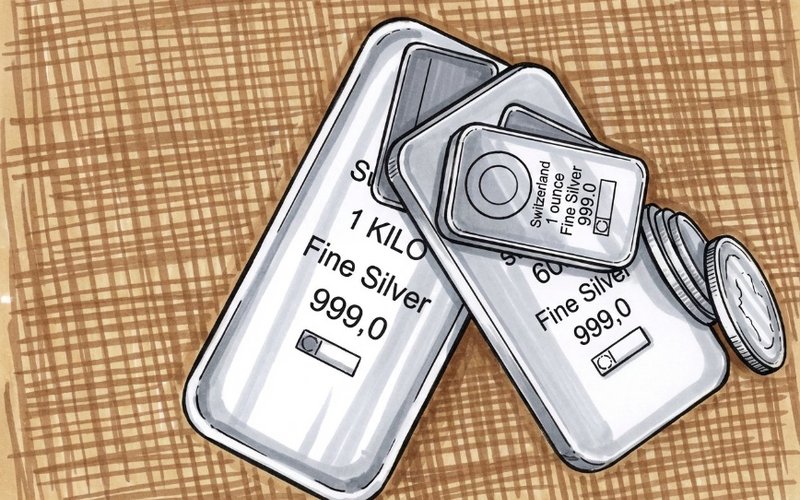

- 01Silver prices have surged over the last year peaking at over $170 per troy ounce, driven by chronic deficits and tariff fears.
- 02Physical supply remains tight as industrial demand exceeds mine output.
- 03ASX Small Caps with quality assets could be a value play, a way in to silver exposure.
Silver has been having a moment.
After years of being the ‘unloved’ precious metal, trading in gold’s shadow, it staged an impressive rally over the last 12 months, breaking out of its historical trading range and reaching new heights.
While volatility remains high in PMs to start 2026, the underlying message from the market seems clear: cheap silver is over. There is now a clear interest in establishing new, high-quality projects.
For investors, who have been seen queuing outside ABC Bullion for months, fear physical shortage in the metal. Does the “paper market” reflect the actual value of silver? Is a futures contract worth the same as holding the commodity in your hand?
Whatever this argument in the market is, it creates a compelling backdrop for ASX-listed miners—particularly those capable of bringing new long-term supply online.
The Macro Picture: What drove the rally?
According to recent insights from J.P. Morgan’s Global Research team, the dramatic rise in silver prices was fuelled by a perfect storm of structural deficits and trade policy fears.
- The Structural Deficit: The market has been in a fundamental deficit since 2021. Demand from industrial sectors, driven by the green energy transition and high-spec electronics has outstripped supply by 100 to 250 million ounces annually.
- The Tariff Equation: The major accelerant over the last year was the US government’s "Section 232" investigation into critical minerals. Fears of a potential tariff on silver imports led to a massive movement of physical metal from London (the global physical hub) to New York (the futures hub) as traders rushed to hedge against duties.
- Physical Tightness: This exodus of metal left the London market incredibly tight, exposing just how thin global inventories have become after years of drawdowns.
The Case for Silver to Rally
While prices have cooled from their speculative peaks, the fundamental case for a sustained rally remains plausible.
- Industrial Demand is Sticky: Silver is the best conductor of electricity for its value. New demand verticals like AI data centres and electric vehicles are increasing demand, alongside growing solar farms gloablly. J.P. Morgan notes that industrial applications now account for roughly 60% of annual demand.
- Tariff Optionality: The US administration decided against immediate tariffs in January, but the door remains open. If trade tensions re-escalate or the US moves to secure domestic supply more aggressively, the "physical squeeze" that drove prices to $170 toz could return.
- Inelastic Supply: Mine supply is notoriously slow to react. About 70% of silver is mined as a byproduct of other metals (copper, lead, zinc), meaning producers cannot simply mine more silver to chase high prices. This inelasticity suggests deficits will persist.
Which ASX Stocks Might Benefit?
With the macro wind at their backs, two ASX-listed companies are positioning themselves to capitalize on the structural shortage.
- Project: Rasp and Pinnacles Mines, Broken Hill, NSW
- Status: Producer / Near-Term Restart
Why they benefit:
- Timing is Everything: BHM is targeting a restart of mining operations at the Pinnacles Mine in the June Quarter 2026. In a market defined by immediate physical shortages, BHM’s ability to deliver near-term ounces is a significant premium.
- Infrastructure Advantage: By consolidating the Rasp and Pinnacles mines, BHM has secured a fully operational 750ktpa processing plant. This eliminates the massive capital costs and permitting delays that face greenfield developers, allowing them to focus purely on extraction and cash flow.
- High-Grade Potential: The Pinnacles Mine is renowned for its high-grade silver-lead-zinc mineralisation, providing direct exposure to the metal without the dilution often seen in large, low-grade bulk tonnage operations.
- Project: Orient Project, North Queensland
- Status: Advanced Exploration / Resource Definition
Why they benefit:
- Critical Minerals Double-Play: Iltani offers a unique "strategic" angle. The Orient Project hosts Australia’s largest silver-indium resource (46Moz Ag Eq). With Indium being a vital component for touch screens and next-gen solar, Iltani provides exposure to both the monetary and industrial value of the metal.
- Government Backing: The company recently secured $8 million from the Queensland Investment Corporation (QIC) Critical Minerals Fund. This state-level endorsement validates the project’s strategic importance in securing non-Chinese supply chains.
- Aggressive Exploration: Iltani isn't sitting on its hands. With a massive 16,000m drill campaign planned for 2026, and recent hits like 7m @ 113.7g/t Ag Eq, the company offers high-leverage exposure to resource growth during a silver bull market.
Other ASX Listed Exposure
Investors looking for broader exposure might also watch Silver Mines Ltd (ASX: SVL), which owns the large undeveloped Bowdens project, and Sun Silver (ASX: SS1).
Diversified miner South32 (ASX: S32) remains a key large-cap proxy via its Cannington mine
Get the wire before the market opens.
The ASX small-cap stories that matter, filed before 9am AEST. Curated by the Small Caps desk.