

- 01Strategic partnership to develop Norway-to-Europe compressed hydrogen export supply chain.
- 02Focus on maturing shipping costs and charter/financing structures for FjordH2 Project.
- 03Progress made despite ongoing funding concerns and early project stage.
Provaris Energy (ASX: PV1) has entered a strategic cooperation with 'K' LINE and Norwegian Hydrogen to develop a compressed hydrogen export supply chain from Norway to Northern Europe.
This collaboration aims to mature shipping costs and long-term charter/financing structures for the FjordH2 Project in Ørskog, Norway.
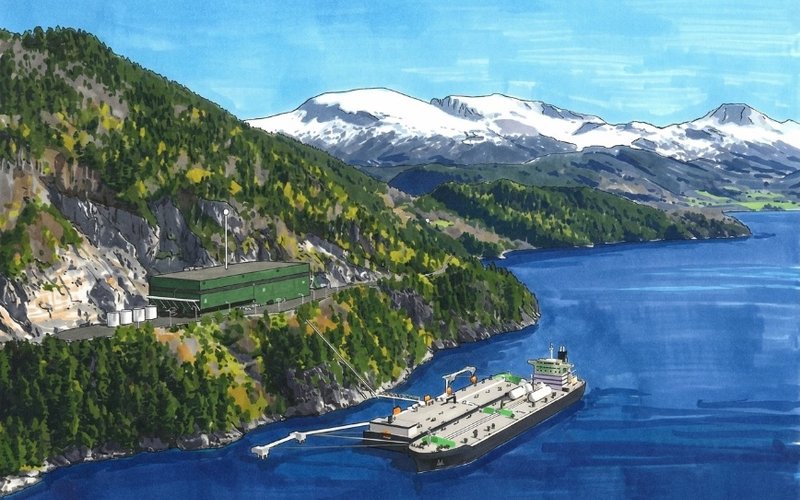
The FjordH2 Project has a proposed capacity of up to 40,000 tpa hydrogen production, leveraging Provaris' H2Neo carriers and H2Leo barge for compressed hydrogen transport.
Previous coverage shows Provaris has been engaged with 'K' LINE since June 2025 on the commercialisation of its hydrogen carriers.
Shipping Solution Development
This agreement advances work to extend an existing detailed supply-chain cost model.
Key activities include maturing shipping costs via updated modelling and drafting terms for long-term charter and financing structures.
The goal is to mature shipping costs and develop updated fleet management planning.
The scope also includes exploring financing alternatives and ownership structures for hydrogen carriers and a barge.
Funding and Project Milestones
Provaris recently raised $1.325 million via an oversubscribed institutional placement in March 2026.
These funds are intended to advance hydrogen and CO2 development workstreams, including the hydrogen prototype tank and Class Approval.
The company faces a material going concern uncertainty, dependent on securing additional working capital.
Its estimated funding runway was 3.8 quarters as of 31 March 2026, with negative net operating cash flow.
Previous reports from February and March 2026 highlighted ongoing LCO2 tank FEED stage development and progress on H2 prototype tank fabrication in Norway.
Cautious Optimism for Hydrogen Exports
Provaris Energy's new cooperation agreement with 'K' LINE and Norwegian Hydrogen is a positive step towards de-risking the FjordH2 Project's export supply chain, particularly by focusing on shipping economics and financing.
However, the company's progress is tempered by ongoing funding uncertainties and the early-stage nature of the project, with binding commercial contracts and funding decisions yet to be finalised.
Get the wire before the market opens.
The ASX small-cap stories that matter, filed before 9am AEST. Curated by the Small Caps desk.