
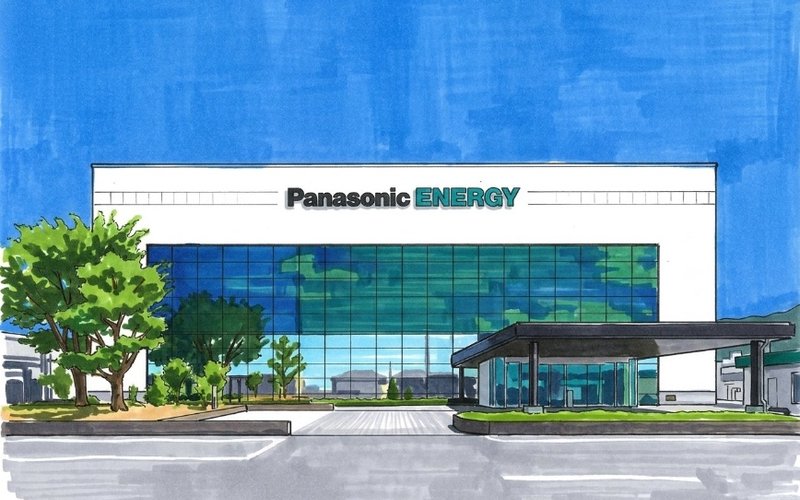

- 01- AAM C-sample to Panasonic; qual advances.
- 02- Panasonic validation pending; H2-2027 target conditional.
- 03- Riverside: 20k tpy, 4 furnaces; 2026 industrial.
NOVONIX (ASX: NVX) has delivered a mass production qualification C-sample of synthetic graphite anode active material, or AAM, to Panasonic Energy, marking a late-stage step in its battery-grade qualification process.
The main takeaway is that the company has moved further down the commercialisation path for North America-made anode material, but formal validation by Panasonic is still pending and the H2 2027 production target remains conditional.
For context, AAM is the graphite-based material used in the anode of a lithium-ion battery.
NOVONIX is trying to commercialise a synthetic graphite product made in North America, rather than relying on imported material.
The shipment is the first known delivery of a synthetic graphite AAM C-sample produced in North America.
NOVONIX said its internal testing indicates the material meets all Panasonic specifications, but it also stated that formal validation remains subject to Panasonic’s assessment over the coming months.
Riverside and Customer Context
The Panasonic program sits inside NOVONIX’s broader North American anode materials strategy, centred on the Riverside facility in Chattanooga, Tennessee.
Riverside is the company’s main synthetic graphite manufacturing scale-up asset, targeting 20,000 tonnes per annum of nameplate capacity.
Four graphitisation furnaces have been installed at Riverside, and the mass-production equipment required for Panasonic qualification was commissioned and completed in October 2025.
That helps explain why today’s C-sample delivery is being framed as a late-stage milestone rather than an early laboratory step.
Dual Riverside Pathway
NOVONIX has been pursuing a two-track pathway from Riverside. Industrial-grade graphite production is still expected in 2026, while battery-grade output tied to Panasonic is currently targeted for H2 2027 because qualification requirements are more stringent and customer-specific.
The Panasonic relationship itself is commercially important, with NOVONIX and Panasonic signing a binding offtake for high-performance synthetic graphite anode material in February 2024.
That update also reset the expected start of Panasonic mass production from earlier guidance of early 2026 to the second half of 2027, while noting that qualification timelines can vary depending on customer protocols.
Customer diversification remains part of the backdrop.
In its quarterly report for the period ended 31 December 2025, NOVONIX said it had shipped more than 100 synthetic graphite samples to 15 customers or prospects during 2025.
The same filing also disclosed that Stellantis had terminated its offtake agreement, leaving Panasonic and other pathways, including PowerCo, more relevant to future revenue visibility.
Numbers and Timing
Today’s announcement did not include revenue, pricing or contract value linked to the C-sample delivery, meaning the significance is operational and commercial-stage related, not a near-term financial change disclosed in dollars.
The immediate timing marker is Panasonic’s validation process over the coming months.
NOVONIX said qualification is rigorous and that timelines can vary by customer protocol, reinforcing that the next stage is not under the company’s sole control.
Funding also remains part of that picture, with NOVONIX reporting a cash balance of US$81.3 million and quarterly net cash outflow from operating activities of US$9.7 million in December 2025.
The company also reported significant capital investment during the period and said its US$100 million convertible debenture facility with Yorkville Advisors had been fully drawn by year-end.
That leaves the business in a familiar position for a company moving from commissioning into commercial qualification.
Technical progress is continuing, but the company is still funding a scale-up phase rather than reporting self-sustaining battery materials cash generation.
Previous company commentary has highlighted a push to localise battery supply chains in North America, including trade actions affecting graphite imports from China.
Today’s C-sample milestone fits that strategic positioning, although the filing itself does not change qualification requirements or customer timelines.
Next Milestones and Risks
The first watchpoint is Panasonic’s formal validation of the C-sample.
If Panasonic’s assessment is favourable, that would represent another qualification step.
If the process takes longer than expected, it could place pressure on the already revised H2 2027 timeline for Panasonic-linked mass production.
The second is operational execution at Riverside.
One delivered sample is not the same as repeatable commercial output, and investors will be looking for evidence of stable uptime, consistent yields and batch-to-batch quality, because those factors typically underpin qualification closure and recurring shipments.
Finally, customer concentration remains relevant.
With Stellantis no longer an offtake customer, ongoing progress with Panasonic Energy, PowerCo and the broader sample pipeline may matter more for how the market assesses future sales visibility.
De-risking, Not Completion
NOVONIX’s Panasonic C-sample delivery is a meaningful qualification milestone because it shows the company has reached a late-stage battery-grade checkpoint using North America-produced synthetic graphite material.
But the announcement does not remove the main uncertainties: Panasonic still has to validate the sample, qualification timelines remain customer-driven.
The path to H2 2027 production still depends on execution, funding, and regulatory overhangs.
Get the wire before the market opens.
The ASX small-cap stories that matter, filed before 9am AEST. Curated by the Small Caps desk.