

- 01NVQ's Coralia trials Chinese apple for biochar at GBR.
- 02Tests pyrolysis yield and carbon storage.
- 03Invasive Chinese apple cleared; Toowoomba pyrolysis trial.
NoviqTech (ASX: NVQ) subsidiary Coralia has commenced a trial at the company’s flagship Great Barrier Reef biochar project in north Queensland to assess Chinese apple tree biomass for pyrolysis, biochar yield, and long-term carbon storage stability.
Coralia aims to demonstrate that the invasive woody weed species can become a scalable feedstock for high-integrity carbon dioxide removal while delivering land restoration, biodiversity and agricultural co-benefits to the Great Barrier Reef catchment, which spans more than 400,000 square kilometres.
A declared pest in Queensland, the Chinese apple tree creates dense, thorny thickets that can degrade pastures, hamper livestock management, and impede environmental access.
The species absorbs carbon dioxide as it grows but releases it back to the atmosphere when it rots.
Biochar Conversion Test
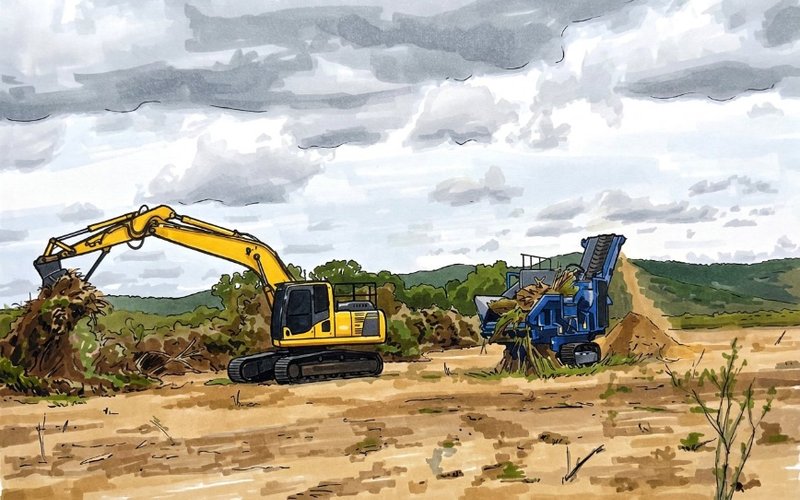
Coralia’s trial will harvest, chipp, and convert invasive trees into high-quality biochar to explore operational feasibility, feedstock quality, environmental performance, and suitability for carbon removal certification pathways.
Three areas of high, medium, and low infestation densities have been selected from aerial surveys, targeted engagement with local landowners and stakeholders, along with ground observations by Coralia’s team to ensure broad clearance of feedstock types across the project landscape.
Clearing and chipping will proceed at a controlled rate to ensure representative sampling without overwhelming downstream processing capacity.
The biomass will then be transported to a pyrolysis facility in Toowoomba owned by engineering company Pyrocal for trials across a range of high operating temperatures to produce biochar samples for laboratory analysis and downstream research.
Indicative timelines put completion of the program at September 2026.
Low-Carbon Concrete Research
Biochar produced from the trial will support Coralia's low-carbon concrete research program with Swinburne University of Technology in Melbourne.
Targeting the data centre sector, the program will include agricultural trials and laboratory analysis.
Trial outputs are intended to support engagement with Pure Data Centres Group subsidiary A Healthier Earth under a strategic agreement to assess carbon removal offtake at the Great Barrier Reef project and inform pilot facility design work with engineering partner TFA Project Group.
The trial is also expected to establish early monitoring, reporting, and verification systems consistent with expectations applied by premium carbon removal registries and sophisticated institutional carbon credit buyers.
Get the wire before the market opens.
The ASX small-cap stories that matter, filed before 9am AEST. Curated by the Small Caps desk.