

- 01Iltani intersects 5.4m of visual sulphides at Isabel.
- 022m zone estimated at 35% sphalerite; assays pending.
- 03Assays due December; 10-hole program may expand.
Iltani Resources (ASX: ILT) has intersected a zone of visually identified sulphide mineralisation spanning 5.4 metres in the first diamond drill hole at its Isabel prospect in north Queensland.
The intersection, extending from 46.3m to 51.7m down hole, contains sphalerite-dominant mineralisation within quartzite breccia, alongside lesser amounts of other sulphide minerals.
Visual estimates identify a particularly sulphide-rich 2m interval containing approximately 35% sphalerite (a zinc sulphide mineral), although laboratory assays are still required to establish grades.
The result opens a drilling campaign aimed at assessing Isabel as a potential satellite deposit to Iltani’s larger Orient silver-zinc-indium resource.
Iltani may extend the program from its initial plan for 10 diamond holes across 1,100m if it consistently intersects mineralisation.
Early Results from Isabel
The strongest visual mineralisation occurred between 47.6m and 49.6m down hole, where geologists have estimated total sulphide abundance at 50%, including 35% sphalerite.
Pyrite, galena, and pyrrhotite were also identified in the mineralised breccia, with trace chalcopyrite contributing to the suite of observed sulphides.
The reported 5.4m interval represents a down-hole intersection rather than a confirmed true width, with the geometry of the mineralisation yet to be fully established and observed mineral percentages field estimates rather than assay grades.
Core from the first hole will be logged, processed, and sampled for laboratory analysis, with initial assay results expected in December.
Two Mineralised Zones
Isabel contains two historically mined mineralised zones approximately 50m apart, with drilling designed to test each from a central position between them.
The western zone is interpreted as a shoot plunging towards the southeast, while the eastern zone consists of more tabular veins dipping west.
Historical drilling during the 1970s and early 1980s tested the western zone to about 90m below surface, leaving the mineralisation open at depth.
However, uncertainty surrounds the precise three-dimensional position of those earlier intersections because historical drill collars cannot be located and no down-hole surveys were undertaken.
Iltani is therefore beginning near surface to establish the mineralisation's position before systematically testing deeper extensions, with planned holes reaching 140m below surface.
Potential Orient Link
At Orient, historical metallurgical test work has indicated that silver, indium, lead, and zinc could be recovered into separate lead-silver and zinc-indium concentrates.
“This is exactly what we want to see from our drilling at Isabel, and to intersect this mineralisation in the first hole of the program is a very good start,” managing director Donald Garner said.
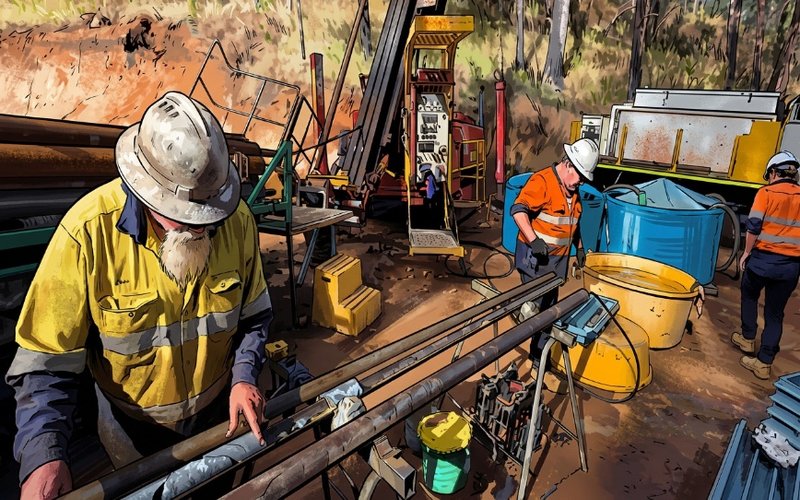
“The diamond drill rig will shortly be finishing this hole, and then it will move onto the next hole as we continue to test the Isabel prospect.”
Subsequent drilling will help clarify whether the prospect's historical mineralised zones continue at depth.
The Orient deposit has a mineral resource estimate of 62.5 million tonnes at 81.5 grams per tonne silver equivalent, providing the broader context for the company's satellite exploration strategy.
Get the wire before the market opens.
The ASX small-cap stories that matter, filed before 9am AEST. Curated by the Small Caps desk.