
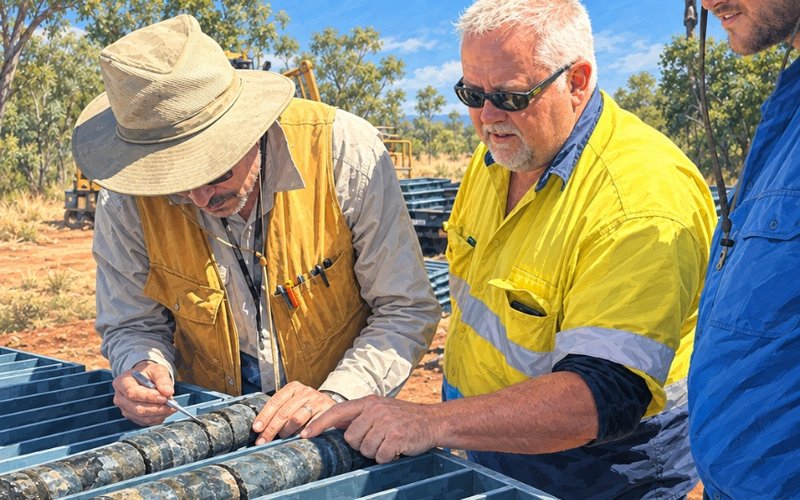

- 01Panton’s revised resource: 82.3Mt at 1.6g/t PtEq for 4.24Moz.
- 02Savannah processing option could offer a lower-capital development path.
- 03Future Metals is pre-revenue; mine plans and funding remain unresolved.
Future Metals NL (ASX: FME) is an Australian exploration and development company centred on its key asset, the 100%-owned Panton project in Western Australia’s East Kimberley.
For investors new to the story, the company’s recent updates have focused on two linked developments: a refreshed Mineral Resource Estimate for Panton, and a proposed lower-capital development concept involving the nearby Savannah processing plant.
Together, those steps have helped frame how Future Metals is trying to move Panton from a resource story toward a more defined development pathway, with the commercial and funding questions to be resolved once this pathway has been clearly defined.
Platinum-Group Metals Focus
Future Metals is best known for Panton, a project prospective for platinum group metals (PGMs), along with nickel and chromium.
PGMs—which typically include platinum, palladium, rhodium, iridium, ruthenium, and osmium—are used across industrial, automotive, and emerging clean-technology applications.
The company also has regional exploration interests along the Alice Downs Corridor, including copper-nickel-PGM targets, but Panton remains the centrepiece of the investment case set out in the company’s filings and presentations.
According to the company profile and recent market disclosures, Future Metals is pre-revenue and its near-term work is focused on studies, permitting, exploration, and corporate negotiations connected to development options for Panton.
What is the Panton Project?
Panton sits in the East Kimberley region of WA and is held on three granted mining leases, according to the company’s quarterly report and research context.
Post-quarter in July, Future Metals released an updated JORC 2012 MRE for the project of 82.3 million tonnes at 1.6 grams per tonne platinum equivalent for 4.24 million ounces PtEq.
That included 40.0Mt in the Indicated category for 2.06Moz PtEq, and 42.3Mt in the Inferred category for 2.18Moz PtEq, according to the company.
The update also shifted the project’s reporting framework from palladium equivalent to platinum equivalent, which the company said better reflects its value as platinum is the dominant revenue contributor at Panton.
In its quarterly disclosure, Future Metals said the new estimate was underpinned by net smelter return analysis and mine optimisation work.
In simple terms, the revised resource gives the company a larger and more current base for future studies. But it is still a resource rather than a reserve, and does not by itself establish a mine plan or production outcome.
Savannah Processing Facility
One of the main recent developments for Future Metals has been a preliminary engineering assessment looking at whether material from Panton could be trucked to the Savannah processing facility, rather than relying on a standalone development route at the Panton site.
In its June 2026 quarterly, the company said this work identified what it described as a compelling alternative development pathway.
That concept is important because it is aimed at reducing upfront capital requirements by using existing infrastructure at Savannah, subject to engineering, agreements and approvals.
Research context supplied to Small Caps indicates the April 2026 Savannah-route assessment reduced indicative pre-production capital from A$267 million to A$193m in a 2023 standalone case.
The same material noted that possible additional modified configurations could reduce capital further, although the company has not disclosed the basis for these changes yet.
Further to this no binding commercial arrangements are in place yet for the Savannah pathway.
Future Metals said the Savannah option may also offer permitting advantages because Panton’s mining leases are already granted and the Savannah plant has primary operating permits in place.
At the same time, the company also acknowledged that the concept requires further work, including an updated scoping study and, if supported, progression to feasibility-level assessment.
Busy Technical and Corporate Period
The company’s latest investor presentation, released in August, followed a busy period of technical and corporate activity.
That included the July resource update and an August capital raising announcement in which Future Metals said it had received firm commitments to raise about $3.6m before costs through a two-tranche placement.
According to the filing, the funds are intended to support the updated Panton scoping study, permitting and licensing activities, further exploration, and costs associated with ongoing negotiations regarding the potential acquisition of the Savannah nickel operations.
Zeta Resources—described in the placement filing as Future Metals’ largest shareholder—committed to subscribe for $500,000 of new shares under the placement, subject to shareholder approval.
Directors and employees also subscribed for a smaller amount, also subject to approval.
The same filing said proceeds would be used to assess both a greenfield development option at Panton and the alternative case using Savannah infrastructure.
That keeps both pathways in view, although the Savannah-linked concept has become the more prominent near-term angle in recent disclosures.
Several Steps Outstanding
While the resource update and Savannah assessment have added definition to the story, the company’s filings also make clear that several major steps remain outstanding.
First, the Savannah route is still subject to commercial negotiations.
Future Metals said discussions have been ongoing with Zeta Resources to determine a potential structure that could maximise value across the relevant assets.
Supplied research context also notes terms involving Savannah stakeholders remain non-binding.
Second, the technical case still needs to be tested in more detail.
The quarterly report said the current Savannah milling circuit, at approximately 120 tonnes per hour, may require ultrafine regrind, flotation optimisation and other modifications.
Tailings capacity and logistics are also part of the assessment.
Third, funding remains a key issue. Future Metals reported cash of A$1.46m at 30 June 2026, with quarterly net operating cash use of A$682,000.
That level of cash supports study and approvals work, but not project construction, based on the company’s disclosed plans.
Broader Critical Minerals Context
Future Metals operates in a part of the market that sits between traditional precious metals exposure and the broader critical minerals theme.
PGMs remain important in industrial applications, especially autocatalysts, while nickel and chromium continue to feature in stainless steel and battery-related supply discussions.
More broadly, WA remains a major jurisdiction for companies seeking to advance critical minerals and battery metals assets using existing infrastructure where possible, particularly as capital discipline becomes a more prominent theme across the resources sector.
Against that backdrop, reuse of established plants and infrastructure has become an increasingly common development concept for smaller resource companies looking to lower capital intensity and simplify approvals pathways.
Future Metals’ Savannah assessment fits into that wider industry trend, although each project still depends on its own technical, commercial and regulatory outcomes.
The Introductory Takeaway
Future Metals is shaping its story around the Panton Project, a platinum-group-metals-focused asset with nickel and chromium exposure in the East Kimberley.
Recent updates have given the market a clearer picture of the project’s scale and highlighted an alternative development route through the Savannah processing plant.
The company’s latest filings suggest the near-term focus is on turning that concept into a more detailed scoping and permitting case, while continuing negotiations and regional exploration work.
For now, Panton remains a study-stage development project rather than an operating asset, with the next phase likely to hinge on updated study outcomes, commercial agreements and funding progress.
Get the wire before the market opens.
The ASX small-cap stories that matter, filed before 9am AEST. Curated by the Small Caps desk.