
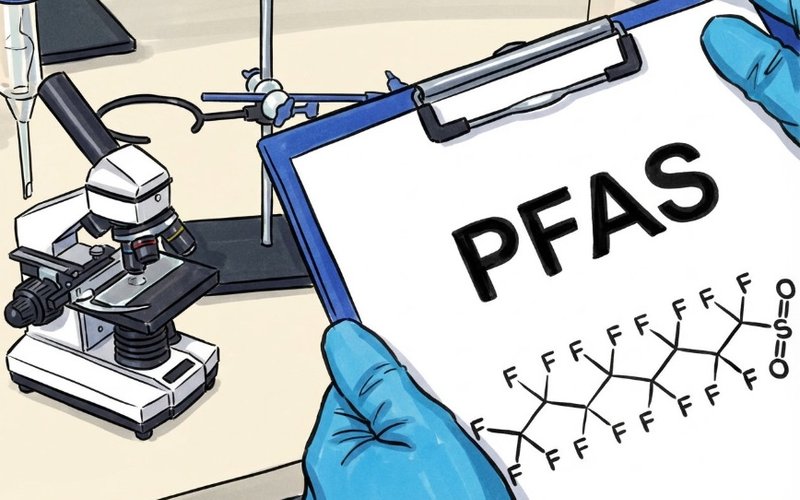

- 01ECT expands Rice U FJH license to destroy PFAS on adsorbents.
- 02On-site FJH cuts incineration and emissions.
- 03>99.9% PFAS removal from carbon media via FJH.
Environmental Clean Technologies (ASX: ECT) has expanded its licence agreement with Rice University in the US to include the right to apply flash joule heating (FJH) to PFAS-contaminated adsorbents such as granular activated carbon (GAC).
GAC is a highly-porous filtration medium commonly used to remove contaminants such as PFAS (per- and polyfluoroalkyl substances) from drinking water.
The expanded licence extends the company’s remediation strategy for PFAS, the next stage in the development of its FJH platform.
It builds on ECT’s established rapid electrothermal mineralisation (REM) technology for the remediation of PFAS in soil, and will enable it to target the destruction of PFAS captured within onsite adsorption materials.
On-Site Platform
The decision to expand the agreement followed a technical assessment of PFAS treatment pathways to broaden ECT’s addressable market to include GAC.
Once saturated, PFAS-laden GAC becomes a concentrated hazardous waste that is typically transported off-site for high-temperature incineration in an energy-intensive process dependent on specialist destruction capacity.
The expanded agreement will enable the development of an on-site destruction platform for PFAS-laden GAC and other adsorbents utilising FJH technology and leverage further core intellectual property developed at Rice University.
Independent peer-reviewed research has shown FJH can achieve >99.9% PFAS removal from contaminated carbon media (such as GAC) under controlled conditions, with favourable lifecycle energy and emissions performance relative to incineration.
PFAS-Destruction Capabilities
ECT chief technology officer Justin Sharp managed the technical assessment process and said the expanded agreement reinforced the company’s position in PFAS destruction technologies.
“The move into PFAS destruction from adsorbents, including those used in water treatment systems, utilises the same licenced FJH technology that I helped develop in my time on staff at Rice,” he said.
“It is highly complementary to our soil remediation capabilities, as it utilises the same system we are developing for the ex-situ REM treatment of PFAS-contaminated soil.
“The industry is increasingly looking for alternatives to incineration when it comes to [disposing of] spent treatment media such as GAC due to growing concerns about releasing PFAS into the atmosphere during combustion.”
“We believe an on-site mineralisation solution that efficiently eliminates PFAS and reduces secondary waste has the potential to address a critical gap those treatment pathways.”
Get the wire before the market opens.
The ASX small-cap stories that matter, filed before 9am AEST. Curated by the Small Caps desk.