
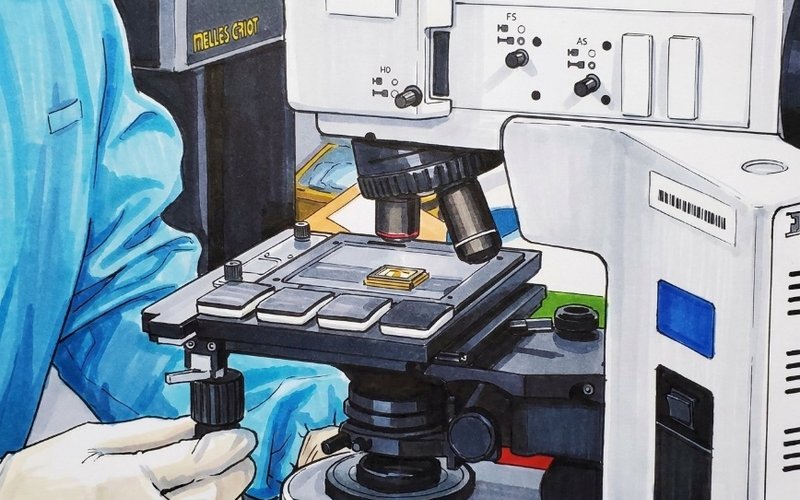

- 01RRAM technology validated for high-temperature operation up to 150°C.
- 02DoD program renewal and modular hardware platform development support robotics/exoskeleton strategy.
- 03Technical de-risking is progressing, but commercialization timeline and valuation remain key investor debates.
DorsaVi (ASX: DVL) has demonstrated its RRAM memory technology can show predictable and fully reversible read/write behaviour up to 150°C.
Testing followed an AEC-Q100-aligned symmetrical heating-cooling protocol, with zero thermal degradation observed across incremental thermal checkpoints at room temperature, 85°C, 105°C, 125°C, and 150°C.
This significant milestone supports the development of 'temperature-aware' RRAM architectures for high-value, heat-exposed robotics and exoskeleton applications, enabling continuous reliable memory in challenging environments.
The company cites these results as a meaningful step in its commercialisation program and reiterates its focus on advancing the platform toward tape-out.
DoD Injury Reduction Program Renewed
A 12-month renewal of a U.S. Department of Defense-funded research agreement with Georgia Southern University has been announced.
The program utilises DorsaVi wearable sensors for field-based gait biofeedback, specifically aimed at reducing training-related stress fractures in military personnel.
This ongoing program is positioned by DorsaVi as a crucial field-proving ground for its broader exoskeleton and robotics strategy, supported by its neuromorphic RRAM compute program.
The company notes it will not incur any material costs related to this agreement extension.
Modular Hardware Platform Underway
DorsaVi has commenced its Ultra-Edge Modular Design and Build program, marking the third workstream in its five-stage execution plan.
This program aims to transition the company's validated RRAM semiconductor and neuromorphic compute technologies into a manufacturable, partner-ready modular hardware platform.
The modular three-layer architecture separates sensing, compute, and memory into interoperable layers.
It targets sub-1mW in-memory compute operation to support coin-cell battery-operated autonomous and wearable applications.
An API integration interface is being assessed to enable OEM and robotics/industrial partners to embed DorsaVi's ultra-edge intelligence without requiring deep semiconductor expertise.
RRAM-Neuromorphic Integration Validated
Technical validation has confirmed that DorsaVi's RRAM memory technology and neuromorphic IP work as a coherent 'ultra-edge intelligence' architecture for robotics and exoskeletons.
The integrated system is projected to deliver up to 10x performance gains by moving memory, signal conversion, and selected compute functions closer together on-device.
This fusion enables fast local sensing, processing, and decision-making without reliance on cloud connectivity, leading to reduced latency and lower power consumption for applications like prosthetics and robotic motion control.
Further validation is planned for the remaining neuromorphic sensing and interface IP assets.
Foundry Compatibility Achieved
DorsaVi recently announced the qualification of three RRAM material stacks with standard commercial foundry BEOL compatibility and CMOS process integration.
This achievement removes a key materials barrier for scaling its RRAM and Compute-in-Memory (CIM) platform to the 22nm node.
The company remains on track for a Q3 2026 tape-out of a 180nm test chip, with the 22nm design phase targeted to start in H2 2027.
Using standard CMOS lines for manufacturing supports cost-effective, high-volume production economics.
Balanced Outlook
DorsaVi continues to make significant technical progress with its RRAM and neuromorphic technologies, demonstrating critical temperature resilience and advancing its modular hardware platform.
While these milestones de-risk the technology pathway, the company's path to commercialisation and profitability faces execution and timing uncertainties.
Further performance validation and partner adoption remain key to unlocking valuation.
Get the wire before the market opens.
The ASX small-cap stories that matter, filed before 9am AEST. Curated by the Small Caps desk.