

- 01FDA clears CT-based BMD for CurveBeam AI
- 02Next: 510(k) for HiRise BMD
- 03Add BMD to HiRise CT workflow
- 04Consolidates CT exam, may reduce DXA
CurveBeam AI (ASX: CVB) has received US Food and Drug Administration (FDA) 510(k) clearance for computed tomography-based bone mineral density (BMD) technology using multidetector CT scans with patients lying down.
The clearance is the first of two regulatory steps the medical imaging developer says are needed to take its software-as-a-service bone-health products to market.
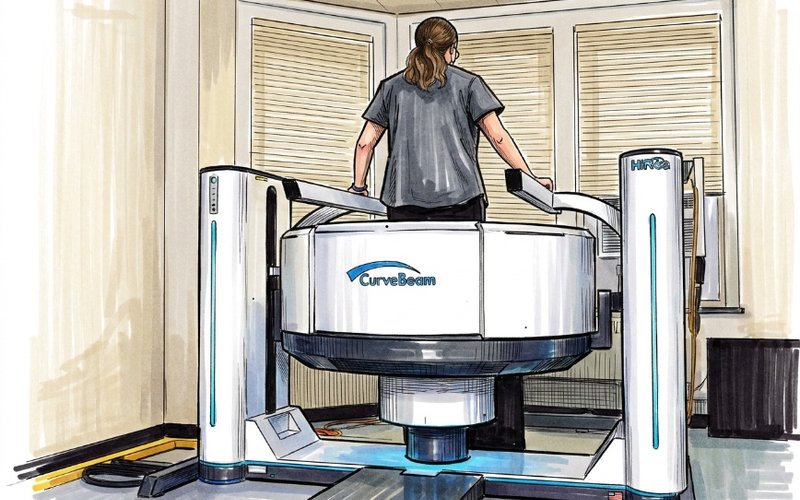
CurveBeam AI now plans to pursue clearance to extend BMD measurement to its HiRise platform, which is designed to provide weight-bearing CT imaging of the lower extremity while a patient is standing.
That next step could allow anatomy, alignment and bone quality to be assessed in a single examination and support future SaaS revenue once the required HiRise clearance is obtained.
HiRise Clearance Comes Next
CurveBeam AI will progress regulatory planning for a 510(k) submission covering BMD measurement on HiRise including assessment of the appropriate pathway, clinical evidence requirements, and validation activities.
The company sees standing BMD measurement as particularly relevant to orthopaedic applications because it could provide quantitative information about bone quality in the same weight-bearing environment used for anatomical and alignment assessment.
Integrating BMD into the existing CT examination could also remove the need for a separate bone-density imaging appointment for some patients while making the same imaging pathway more useful for orthopaedic evaluation and surgical planning.
“Achieving our first FDA 510(k) clearance for CT-based BMD establishes an important regulatory foundation for the Company and demonstrates our ability to bring quantitative bone health capabilities through the FDA pathway,” chief executive officer Greg Brown said.
Mr Brown called the FDA clearance “particularly exciting, because it aligns quantitative bone health assessment with the weight bearing imaging environment that is central to the HiRise proposition.”
Broader Surgical Planning
Longer term, CurveBeam AI believes quantitative BMD information could become an additional data layer in digital orthopaedic workflows built around CT-derived, patient-specific three-dimensional anatomical models.
Subject to further regulatory clearances and clinical validation, the same CT dataset used for advanced and robotic-assisted surgical planning could potentially give surgeons and planning systems bone-quality information alongside anatomy and alignment.
That approach could make a single CT examination more useful across assessment and planning, including for patients being prepared for total joint replacement, without requiring a separate DXA appointment.
CurveBeam AI will continue evaluating how quantitative bone-quality information could be integrated into broader CT-based orthopaedic workflows as the HiRise regulatory program advances.
Get the wire before the market opens.
The ASX small-cap stories that matter, filed before 9am AEST. Curated by the Small Caps desk.