
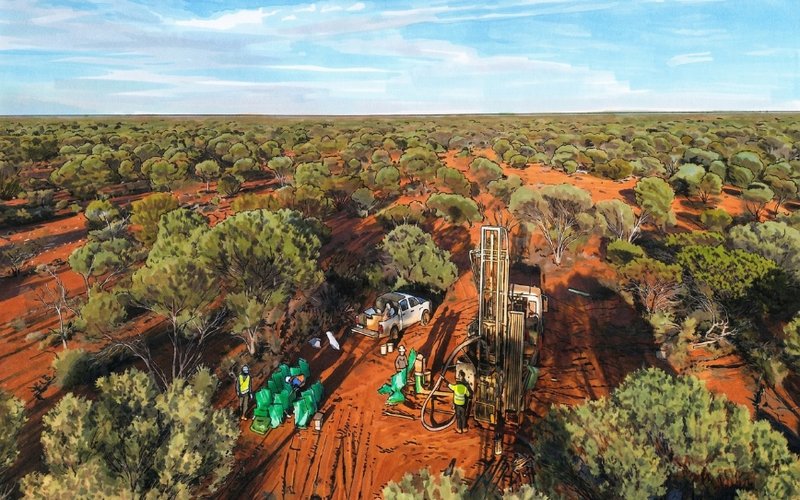

- 01Critica restates Mt Lindsay MRE (JORC 2012).
- 02MRE: 19 Mt @1.09% SnEq; 49 kt Sn; 28 kt WO3.
- 0312 Mt Indicated; Main/No.2; Livingstone 4.4 Mt Inferred.
Critica (ASX: CRI) has restated the mineral resource estimate for its 100%-owned Mt Lindsay tin-tungsten project in northwest Tasmania to come under the 2012 edition of the Australasian JORC Code.
The project-wide MRE stands at 19 million tonnes grading 1.09% tin equivalent (SnEQ) at a 0.4% SnEQ cut-off, containing approximately 49 kilotonnes of tin and 28kt of tungsten trioxide (WO₃).
Critica selected the 0.4% SnEQ reporting cut-off after considering mineralisation continuity and distribution, metallurgical recoveries, and commodity pricing, while noting future mining, processing and financial studies could support a different cut-off.
Around 12Mt is classified as Indicated, containing approximately 31kt of tin and 20kt of WO₃, with the balance classified as Inferred across the Main and No.2, Livingstone, and Reward deposits.
The restatement gives Critica a current resource base for further evaluation of a mineral system that has received more than 88,000 metres of diamond drilling across the project.
Resource Base Now Current
The Main and No.2 deposits account for most of the resource, including 12Mt of Indicated material grading 1.22% SnEQ and a further 2.3Mt of Inferred material at 0.85% SnEQ.
Livingstone contributes 4.4Mt of Inferred material grading 0.88% SnEQ, while Reward contains smaller Indicated and Inferred resources grading just above 1% SnEQ.
“With its substantial tin and tungsten resource, established infrastructure advantages, and location in Tasmania, we believe Mt Lindsay has the potential to become an important Australian source of these strategically important metals,” chief executive officer Jacob Deysel said.
“The timing is also compelling—tin and tungsten markets have strengthened significantly, while the strategic importance of secure Western supply chains for these metals continues to grow.”
Established Mining District
Located approximately 20 kilometres west of the Renison Bell tin mine within an established mining district, Mt Lindsay has access to existing road and power infrastructure including Tasmania’s hydroelectric power network.
The Main and No.2 mineralised systems remain open down plunge, providing scope for additional exploration as technical work continues across the broader project.
Pilot-scale test work on representative Main and No.2 material produced a 45% tin concentrate at 72% overall recovery, a tungsten concentrate exceeding 66% WO₃ at 83% overall recovery and a 65% iron ore concentrate at 98% recovery.
Further bulk and pilot metallurgical test work is in progress on selected mineralisation types to optimise concentrate grades and recoveries as Critica refines the project’s development parameters.
All reported resources sit within granted Mining Lease 7M/2012 and Exploration Licence 21/2005, both held 100% by Critica.
Project Evaluation Studies
Resource definition draws on extensive historical and more recent drilling, with 428 diamond holes totalling 78,556m used to geologically define the deposits included in the updated estimate.
The Main and No.2 mineralisation models extend from surface to about 600m depth, while Livingstone reaches about 250m and Reward about 150m from surface.
Critica is progressing scoping studies for both Mt Lindsay and Jupiter, with completion of each targeted by the end of the third quarter of 2026.
Additional metallurgical, exploration, and technical work will support continued evaluation of Mt Lindsay, including assessment of the resource, processing assumptions, and potential development options.
Get the wire before the market opens.
The ASX small-cap stories that matter, filed before 9am AEST. Curated by the Small Caps desk.