
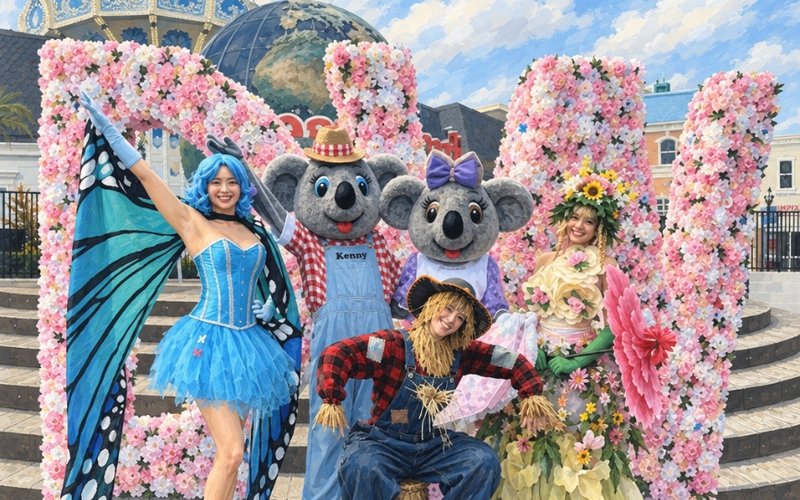

- 01Coast proposes a $260m Dreamworld hotel and leisure precinct.
- 02Owner-led development could deliver modelled returns above 20%.
- 03Funding may use cash, debt and operating flows, without new equity.
- 04Hotel target: 2030–31; plans remain subject to approvals.
Coast Entertainment Holdings (ASX: CEH) has outlined a proposed $260 million transformation of Dreamworld into an integrated tourism destination incorporating a hotel as well as an entertainment, dining, and retail precinct.
The Gold Coast operator is considering a four-star 250-room Dreamworld-branded hotel costing about $200m, and a complementary leisure precinct with an indicative investment of $60m.
An independent strategic assessment favours Coast developing and owning the assets, with preliminary modelling indicating leveraged investment returns above 20% and a combined value on completion of around $330m.
The proposal remains subject to technical studies, detailed costing, planning processes, financing, and final board approval, with the hotel targeted for completion around 2030 to 2031.
Land Approval Options
Planning approval obtained in July covers Coast’s 55-hectare Coomera landholding, allowing the group to examine new commercial uses alongside its established theme park operation.
The proposed hotel would seek to convert single-day park visits into overnight stays, while the entertainment, dining, and retail precinct would serve both tourists and local residents without requiring park admission.
Coast envisages specialist third-party operators occupying the leisure precinct, which could be developed in stages and potentially begin generating rental income before the hotel opens.
Other approved land uses include residential and mixed-use development, but management intends to realise value from surplus land through capital-light arrangements rather than become a residential property developer.
Direct Development Favoured
Financial adviser Barrenjoey examined alternatives including outright land sales, partnerships, maintaining existing uses, and direct development before identifying owner-led investment as the preferred risk-adjusted option.
The preliminary assessment points to potential leveraged internal rates of return above 20% across the two developments, although those figures are modelling outputs rather than forecasts or committed financial outcomes.
Coast remains open to capital partners where they improve the balance of risk and return, particularly as construction costs, operating assumptions and financing conditions undergo further validation.
The group estimates Dreamworld and SkyPoint have combined independently assessed fair values of approximately $348m, compared with an implied market valuation of roughly $165m after allowing for cash at 30 October.
Debt Funding Without New Equity
Coast finished the 2026 financial year with $35m in cash, no drawn debt, and an undrawn $20m banking facility, providing a starting point for evaluating project finance.
Its funding options include available cash, operating cash flow, corporate or project debt, and eventual monetisation of non-core land, with preliminary peak gearing potentially remaining within a 30% to 35% target range.
“I want to be direct on this: our current strategy does not contemplate a new equity raising,” group chief executive officer Greg Yong said.
Management has committed to funding park safety, maintenance and attraction renewal before any development expenditure, while acknowledging that no final financing package has been agreed.
“Ultimately, our funding approach will be disciplined, with a clear focus on protecting our core business while delivering long-term value for shareholders,” Mr Yong added.
Stronger FY26 Trading
The expansion strategy follows a stronger FY26 in which theme park visitation rose 26.5% on a like-for-like basis to more than two million guests and operating revenue increased 19% to $116.5m.
Theme Parks & Attractions EBITDA, excluding specific items, more than doubled to $18.8m, while the group returned to a $6.1m net profit after tax.
Unaudited trading through September showed visitation rising 18.4%, revenue gaining 12.5% and EBITDA excluding specific items increasing 22.3%, despite a 16.2% decline in ticket sales caused mainly by promotional timing.
Coast is now progressing master planning, technical design, and cost validation ahead of further approvals and tendering, with staged construction provisionally envisaged between 2028 and 2030 and investment decisions contingent on meeting return hurdles.
Get the wire before the market opens.
The ASX small-cap stories that matter, filed before 9am AEST. Curated by the Small Caps desk.