

- 01Samphire MRE up to 30 Mlb U3O8 after Plumbush.
- 02ISR cuts capex; no blasting, tailings.
- 03BFS due mid-2027; SA uranium premium.
While global nuclear energy targets continue to outpace mine supply, bringing a greenfield uranium deposit online is notoriously difficult. Lengthy regulatory red tape, massive upfront capital costs, and intense environmental scrutiny regularly stall conventional hard-rock developers for decades.
Alligator Energy (ASX: AGE) is attempting to bypass these traditional hurdles entirely.
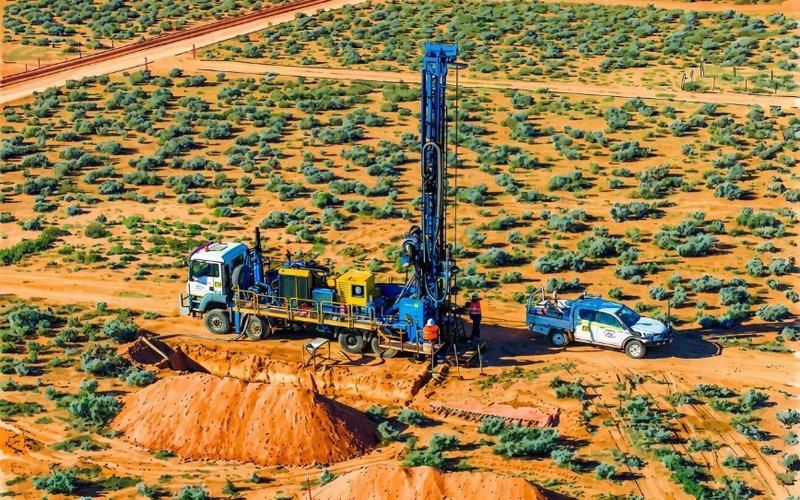
Operating at its flagship Samphire Uranium Project in South Australia, the company is advancing a shallow, sediment-hosted deposit specifically tailored for In-Situ Recovery (ISR). Following a massive 67% resource upgrade announced in June 2026, Alligator has transitioned from a localised explorer into a genuine district-scale development platform.
Backed by strong treasury reserves and sitting inside Australia's premier uranium postcode, the company is systematically advancing toward a definitive Bankable Feasibility Study (BFS) slated for release in mid-2027.
The Structural Uranium Deficit
Alligator’s aggressive push at Samphire coincides with a severe, long-term structural deficit in the nuclear fuel cycle.
Global demand is being propelled by a dual-engine reality: the international mandate for zero-carbon baseload electricity, paired with the sudden, massive power requirements of AI data centres. Major tech companies are increasingly looking to nuclear energy to guarantee uninterrupted, grid-scale power.
On the supply side, years of depressed commodity prices left utility inventories severely depleted, while geopolitical friction has cast long-term doubt over enriched supply out of Russia and Central Asia. Western utilities are actively hunting for secure, friendly production.
Because South Australia holds a multi-decade track record as a reliable global exporter, advanced near-term developers like Alligator are capturing a significant jurisdictional premium.
How the Company Wins
The 67% Plumbush Surge
The company's June 19 announcement radically altered Samphire’s economic model. By defining a maiden Inferred Mineral Resource Estimate (MRE) of 12 Mlbs U₃O₈ (14.9 Mt at 370 ppm) at the Plumbush deposit, Alligator grew the total Samphire resource base from 18 Mlbs to 30 Mlbs U₃O₈.
Because Plumbush sits just five kilometres south of the primary Blackbush deposit, it unlocks major regional infrastructure synergies. Rather than duplicating capital costs, Alligator can design a single central processing plant that feeds off multiple surrounding well-fields.
The ISR Cost & ESG Advantage
Unlike conventional open-cut mining, ISR involves injecting a mild leaching solution (typically weak acid or alkaline groundwater) into permeable sandstone aquifers to dissolve the uranium.
The solution is pumped to the surface and stripped out via enclosed ion-exchange columns before the water is returned to the basin. This means zero blasting, zero crushing circuits, and zero permanent tailings dams.
For project financiers, ISR translates to first-quartile capital efficiency, highly suppressed operating costs, and a drastically faster environmental permitting timeline.
South Australia: The pro-uranium postcode
Geographic location is arguably Alligator’s greatest structural moat. Located roughly 20 kilometres south of the industrial hub of Whyalla, Samphire sits inside the Gawler Craton of South Australia.
Unlike Western Australia or Queensland—where state-level political friction regularly blocks uranium extraction—South Australia is a mature, established Tier-1 uranium jurisdiction.
As the home of BHP’s Olympic Dam and Boss Energy’s Honeymoon ISR restart, the state possesses an experienced mining inspectorate, clear export pathways, and a highly skilled local workforce.
Proof Points & Near-Term Catalysts
Trading at an accessible market capitalisation, Alligator’s primary task over the next 12 months is converting raw contained pounds into bankable engineering metrics. Key milestones to track include:
- Aggressive H2 2026 Drilling: A multi-rig drilling program is currently spinning across the Samphire tenure. At Blackbush, 25m-by-25m infill drilling aims to convert Indicated material into the ultra-high-confidence Measured category, while regional rigs test the 5-kilometre mineralised palaeochannel linking Blackbush to Plumbush.
- The Early 2027 Resource Upgrade: Assay and downhole gamma results from the current drilling campaigns will be consolidated into a definitive MRE update in early 2027.
- Mid-2027 Bankable Feasibility Study: The ultimate commercial catalyst. The BFS will lock in final capital expenditure numbers, well-field decline curves, infrastructure layouts, and binding operating cost projections.
Key Risks
- Resource Conversion: While a 30 Mlb headline figure provides genuine scale, the 12Mlb at Plumbush and 3.8Mlb at Blackbush remain in the lower-confidence Inferred category. The company's BFS valuation hinges on upcoming infill drilling successfully converting those pounds into Indicated and Measured resources.
- Hydrogeological Containment: The fundamental operational risk in any ISR project is subsurface fluid management. Alligator must demonstrate through continuous field leach trials that the mineralised aquifers are completely isolated by impermeable clay layers, preventing any leaching solution from escaping into regional groundwater tables.
- Uranium Spot Volatility: While long-term utility contracting fundamentals remain exceptionally tight, junior developers are historically sensitive to short-term swings in the spot price, which can impact equity dilution if pre-construction capital raises are required.
The Bottom Line
Alligator Energy offers small-cap investors a rare combination of pure-play uranium leverage, Tier-1 jurisdictional safety, and low-capex extraction technology.
By delivering a 67% resource expansion at Plumbush, the company has proven that Samphire is a genuine, expanding mineral district rather than a single isolated deposit.
If ongoing infill drilling successfully converts the broader 30-million-pound inventory into bankable reserves and field leach trials maintain high recovery rates, Alligator will find itself near the front of the queue to become Australia's next commercial ISR uranium producer.
Watch this Alligator Energy ISR overview for a detailed breakdown of the company's pathway to this end.
Get the wire before the market opens.
The ASX small-cap stories that matter, filed before 9am AEST. Curated by the Small Caps desk.