
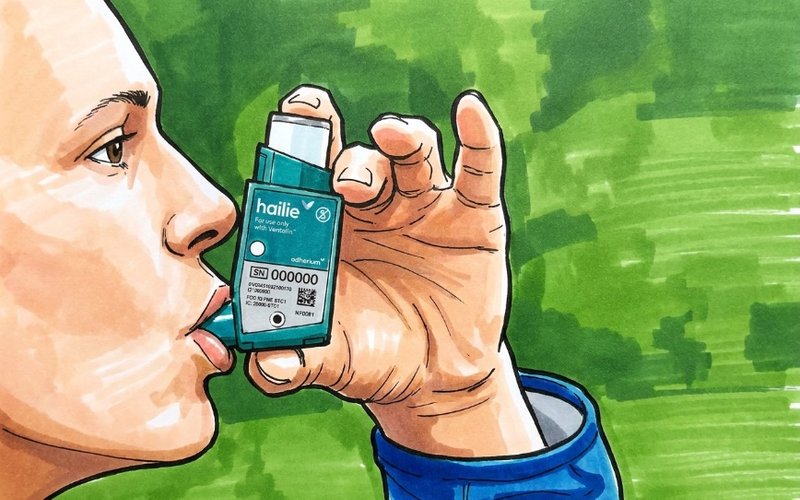

- 01Hailie RPM for remote asthma/COPD.
- 02Shift to US RPM subscriptions.
- 03Target VBC deals; iCARE validation.
- 04FY2026: 10k devices; 40k pipeline.
Key Points
- Adherium (ASX: ADR) is a digital health company commercialising the FDA cleared Hailie Smartinhaler ecosystem to support Remote Patient Monitoring (RPM) for asthma and COPD patients.
- The company is shifting from project-based revenue toward recurring RPM subscription revenue in the US healthcare market.
- The key long-term opportunity is the potential to secure Value Based Care (VBC) contracts with US health insurance payers. In June 2026, Adherium appointed a Chief Commercial Officer with substantial experience in Value Based Care to lead this strategy.
- Clinical and commercial validation is supported by the Intermountain Health iCARE program, which has delivered improved adherence and reductions in hospitalisation-related metrics and lower overall healthcare costs that may be relevant to insurance payer discussions..
- FY2026 is an important execution period, with management targeting approximately 10,000 RPM device shipments by the end of year, supported by a verified pipeline of 40,000 eligible patients.
As the global healthcare sector continues its shift toward digital and preventative care, Remote Patient Monitoring has become a valuable tool for managing chronic diseases. Respiratory conditions such as asthma and COPD remain economically significant challenges for healthcare systems.
For investors analysing the digital health sector, the focus extends beyond hardware technology. The larger question is whether a company can integrate patient data into clinical workflows, support eligible fees-for-service reimbursement, and develop a pathway towards a large-scale payer contracts with commercial health insurance companies.
The Insurance Opportunity
To understand Adherium's long-term commercial opportunity, it is useful to view the company's US healthcare strategy in two phases.
Phase 1: Fee-for-Service RPM
Historically, physicians had limited visibility into a patient's actual inhaler usage between clinic visits.
Objective measurement of inhaler adherence and technique is recognised within both the Global Initiative for Asthma (GINA) and Global Initiative for Chronic Obstructive Lung Disease (GOLD) treatment frameworks.
The US Centers for Medicare & Medicaid Services (CMS) set up RPM billing codes that allow clinical providers to be reimbursed for continuously monitoring patient data where applicable.
Adherium generates recurring revenue by providing hardware, software and clinical care support that enables care providers to increased oversight of their patients between care visits.
Phase 2: Value Based Care and Payer Contracts
While fee-for-service RPM provides a recurring revenue base, the commercial opportunity for digital health companies is securing Value-Based Care contracts directly with commercial insurance payers.
Management's strategy is to use RPM as the operational and clinical foundation for future Value-Based Care contracts, where revenue may be linked to demonstrated reductions in healthcare utilisation and total cost of care.
Insurance companies face significant costs when asthma or COPD patients experience severe exacerbations that result in emergency room visits or hospital admissions. If Adherium can prove that the Hailie Smartinhaler system helps reduce these events and lowers overall care costs, insurers may be more likely to fund broader deployment across eligible patient populations.
A material payer contract would shift the sales opportunity from individual clinic adoption toward larger-scale network deployment funded by the insurer. This could become one of Adherium's most significant potential value drivers by improving scalability and supporting a more recurring revenue model.
Building the Case for Payers
To win payer funded contracts, Adherium needs robust, real-world evidence demonstrating that its technology can improve adherence, reduced healthcare utilisation, and lower total cost of care.
This is why the results from the iCARE program, conducted by Intermountain Health utilising Adherium's Hailie Smartinhaler devices and supported by CareCentra, are an important commercial validation point.
The iCARE program, which has evaluated more than 1,000 asthma and COPD patients in a real-world care setting, utilised Adherium's Hailie Smartinhaler suite of products as a core component of a multi-modal respiratory management program designed to improve adherence, inhaler technique, and patient engagement.
The program recorded a 235% increase in real-world adherence compared to published norms, a 53% reduction in inpatient admissions, a 67% reduction in 30-day readmissions, and a 57% reduction in annual total cost of care per patient.
These outcomes are the types of real-world results that support payer discussions regarding broader deployment of sensor-enabled respiratory management programs.
Supported by these results, Adherium is increasing its focus on the payer market. In June 2026, the company elevated John Perry from Senior Vice President, Value Based Care to Chief Commercial Officer and charged him with leading the company's expansion into payer-funded and value-based care opportunities.
Hailie Platform and Competitive Positioning
Adherium's proprietary hardware-agnostic approach may provide a competitive advantage. Rather than manufacturing drugs, Adherium provides FDA-cleared hardware sensors that attach to a range of existing inhalers.
This allows the company to integrate across multiple inhaler brands without requiring physicians to change prescribing habits, which may reduce adoption barriers for larger US health networks and payers, as demonstrated through contracts with organisations including Allergy Partners, Senta and Consortium of Independent Immunology Clinics (CIIC).
Beyond monitoring adherence, the platform generates objective, real-world respiratory data from patient inhaler use that may become increasingly valuable as healthcare systems adopt value-based reimbursement models.
At the 2026 Eastern Allergy Conference, Adherium presented data derived from its proprietary patient dataset demonstrating the ability to identify and characterise inhaler technique errors in real-world use.
These findings highlight the potential value of sensor-derived respiratory data beyond adherence monitoring alone and support the development of future clinical, pharmaceutical, and payer-focused applications.
Catalysts to Watch
- VBC / Insurance Contract Wins: Any announcement of a signed Value-Based Care contract or reimbursement agreement with a commercial US payer would materially reduce the company's reliance on fee-for-service billing and could lead to a reassessment of its growth outlook.
- Active Patient Growth: Quarterly growth in active monitored patients will be an important indicator of operational progress. Management has guided approximately 10,000 RPM device shipments by the end of CY2026, supported by an existing pipeline of 40,000 insurance-verified, compatible inhaler patients.
- Revenue Quality and Mix Shift: A sustained increase in RPM subscription receipts, which grew 101% quarter-on-quarter in Q3 FY26, compared to legacy project revenue would indicate progress toward a more recurring revenue base.
Key Risks
- Funding and Liquidity: Adherium is a microcap company, with an approximate market capitalisation of A$11 million, and continues to operate at a loss while it scales. The company has historically used limited cash buffers and is still dependent on external capital. Dilution from future equity raisings stays a key risk to per-share value. While recent capital raisings have improved liquidity, successful commercial execution remains important to reducing future funding requirements.
- Operational Execution: The investment case would weaken if rising device shipments did not translate into active, persistent, billable patients due to onboarding friction or limited clinic capacity.
- Failure to Secure Payer Contracts: If the iCARE data does not convince commercial insurers to sign value-based contracts, Adherium may remain reliant on the slower clinic-by-clinic fee-for-service rollout model.
Bottom Line
Adherium is entering an important execution period. Hailie technology is FDA-cleared and supports growing recurring revenue through fee-for-service RPM channels. However, the company's larger long-term opportunity appears linked to payer adoption and the potential to secure Value-Based Care contracts.
Encouraging real-world evidence from the iCARE program, including improvements in medication adherence, reductions in healthcare utilisation and lower total cost of care may strengthen Adherium's ability to pursue payer-funded opportunities.
A material payer contract could significantly improve the scalability of the business model by expanding deployment from individual clinic adoption toward larger covered populations funded directly by health plans.
While execution, funding, and payer adoption risks remain, Adherium has established many of the foundational elements required to participate in the growing intersection of digital health, remote patient monitoring, and value-based respiratory care.
The company's ability to convert clinical outcomes into commercial payer relationships will likely be a key determinant of future growth and shareholder value.
Get the wire before the market opens.
The ASX small-cap stories that matter, filed before 9am AEST. Curated by the Small Caps desk.